John Rutherford Spence was born in 1880, in Roxburghshire, Scotland, to William and Elizabeth Spence.Rutherford was his mother's surname. His father was a gardener in domestic service, and a deacon in the Presbyterian Church. John attended church services with his family and came to faith at a young age.
At age 21,John was serving as a lawyer's apprentice.
He travelled to Canada, and worked at several different jobs in Winnipeg before settling as an accountant. He was attending the Presbyterian Church but also active in the Salvation Army. For years he had suffered from an embarrassing stammer. One night in his prayers he made a promise to God that, if healed of his infirmity, he would serve Him anywhere. He awoke next morning to find he was healed.
At a service in the (Pentecostal) Calvary Temple, he heard South China missionary Blanche Appleby speak, and knew China would be his field of service.
He trained for ministry in the Pentecostal Church and was ordained in 1918. His name appears in the AoG Directory of Ministers for that year.
In 1919 he was in Sainam(Xinan)in Guangdong, China, doing two years of language study prior to entering the mission field. He was aged 39.
While he was on language study, he met Phoebe Holmes, an American from Michigan, USA.She had been in China since 1910 doing evangelistic work and sharing the gospel message in villages northwest of Canton.In 1920, she had to be rescued from civil unrest in Chong Kong. John Rutherford Spence was one of the rescuers, and a friendship grew from there.
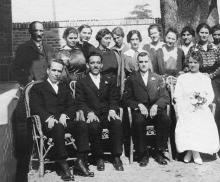
Rev Spence and Phoebe Holmes were married in 1921, opting for a simple celebration rather than the lavish—and often debt-inducing—weddings common at the time. Afterwards they rented a house in Canton for some months while he attended language school there, prior to living in the missionary house in Sainam.
Spence started preaching the gospel using an interpreter. He observed, 'Right from the start, souls were being saved. Soon I was an evangelist, preaching at our stations.' He was in such demand as a speaker, his language learning fell by the way. As two evangelists, John and Phoebe were a formidable couple.
In August 1922, their first child was born to them while on vacation in Macau, a daughter, Margaret Blanche.
They were then asked to go further inland and take over the work at Waitsap (Huaiji). They were also responsible for Leung Tsuen, 18 miles away. With many stations to serve, they couldn’t do them all justice, with all the meetings, conversions and baptisms.In 6 months they sold over 20,000 gospels.
These were times of Communist civil unrest in the years preceding the Canton Uprising (1927), and the Spences at one point had to be rescued and taken downriver to safety when Waitsap was surrounded by hostile forces.
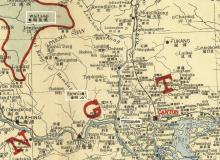
In 1924 they left Waitsap and went to Sainam, 30 miles north-west of Canton. There the Spences took over the superintending of the Assemblies of God work in South China.The work was large and exacting, including as it did the running of the Missionary Home and the work of secretary and treasurer.
Phoebe took over the running of the Missionary Home along with her little one.With the large work at Sainam, at any time there were several missionaries staying in the Home, some of them studying language, others passing through.
Rev Spence was often away from home, going round the different stations holding meetings, baptising candidates and dispensing the Lord’s supper.
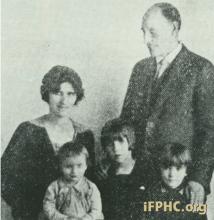
Later in 1924,Phoebe was expecting another child and went home on furlough.A second daughter, Ellen Jean, was born in Michigan, USA.
Not one to be idle, she ministered in church services in Flint, then crossed into Canada and went from coast to coast speaking at missionary conventions.As had happened in China, scores of young people came to faith under her ministry.
After 10 months on his own in China, Rutherford Spence came home on furlough on the Empress of Australia in March 1925 to a happy reunion in Flint.The conventions continued to make huge demands on Phoebe.
In January 1927,Rev Spence felt it necessary for him to return to China.In his absence the Communists had taken over Canton and for three days there had been carnage in the city.Fellow AOG missionary John Perdue had sent photos of the shocking scenes.Although Communism was routed, no one dreamed that in 22 years it would rule supreme in China.
Back in Canada, Phoebe’s health broke down under the punishing schedule while she was visiting friends in Chicago.From then on she had a battle with asthma, which was to take her life in the next 10 years.
Concerned for his wife, in April 1927, Rutherford Spence returned from Hong Kong to Canada on the Empress of Canada to take a pastorate at home while she recovered, and the family settled in Gilbert Plains, Manitoba, Northern Canada.Revival had broken out there and it continued under his ministry.During their two years there, 150 were saved and baptised, of which 14 were to serve in the mission field.Others became leaders in Pentecostal ministry in Canada.
In April 1928, a third daughter, Patricia Holmes was born.
In Gilbert Plains, Phoebe kept open house, and young people made it a second home.There was a weekly street service attracting hundreds, plus a programme of varied activities from walks to special meals.
Rev Spence was often away on missionary conventions, but Phoebe carried on regardless.
Her health improved enough for the Spences to return to China in 1929.
Back in Sainam, Phoebe took charge again of the Missionary House and Rev Rutherford Spence was appointed District Evangelist.After three years they moved to Sz Wui (Sihui)and rented a house there, using the ground floor as a chapel for their meetings.Their home soon filled with new believers, but Phoebe became ill again and she contracted pneumonia.She was sent to the mountains of Yunnan.Kunming, the capital, is 7000 ft above sea level and 900 miles inland and the gateway to Tibet.Here she recovered wonderfully, only to relapse on her return.
Back in Sz Wui, Phoebe's health situation brought a change in her ministry to one of intercession, and she prayed during the long nights when she couldn’t sleep.Once more she went to Yunnan with her Bible woman.
All this travelling was very expensive and the Spences relatively poor, but time and time again, they found their needs were met through generous individuals they encountered or supporters from home.
The Spences spent some time in Hong Kong. They were there in 1935 and 1936, and Rev Spence was speaking regularly at The Emmanuel Church of the Clifts. In Hong Kong the doctor suggested the Spences move to Kunming for the sake of Phoebe's health.
A third trip was made to Yunnan, this time by both the Spences.The cooler air there worked wonders again, they rented a house and they soon made contacts and friends.They held meetings and Sunday School and ministered to children, adults and students. A church was started in Kunming.
The Sino-Japanese War was raging. Circa end 1938/ early 39, Rev Spence left for Hong Kong to meet Margaret who had just graduated from the China Inland Mission School at Chefoo*.As he said goodbye to Phoebe, he didn’t know he was not to see her again.
At this point he was recalled to Canada by Headquarters to speak at the Society's Missionary Convention.A convert, Ah Lau, at risk to his own life, took him through Japanese lines to Macau and Hong Kong. There was devastation everywhere. He reported, 'Canton and Fat Shan are dead - no Christians and no work left. Sainam is a heap of ruins; Hoh Hau and Sam Shui, too. Sz Wui is being terribly bombed.'
Margaret went to Kunming for a special time with her mother, who was ever busy preaching and entertaining visitors.
At this point, Phoebe’s health finally gave out. In April 1939, she died in Kunming while Rutherford Spence was in Canada.She was in her early 40s.
In Canada, Rutherford Spence made arrangements for the care of his three daughters and returned to Hong Kong in the fall of 1941 to carry on the work alone in Sz Wui.He was 61.
In December of 1941, Spence was in the Missionary Home ('by Signal Hill and some big guns' - possibly the Seaman's Mission?)in Hong Kong when the Japanese invaded. He was with a number of other missionaries waiting to be flown into free China.
He managed to contact the Cliftsand was urged to stay with them in their apartment on the top floor of 77 Pok Fu Lam Road. As well as theiramah and cook, they had five other adults and three children with them.
Rationing was in place, and Spence went out with Winifred Clift for the bread ration. On the Sunday morning before Christmas,he gave a talk on the 23rd Psalm – The Lord is my Shepherd.
On January 5th, he was 'rounded up by the Japanese' and interned in the Nam Ping Hotel, where Frances Cook and Winifred Clift were also interned, and on 22nd January taken by launch to Stanley, where he shared accommodation in a room with three other men for the next 19 months. He made good use of the time and ran evangelistic services and Bible studies, and in a time of great suffering and deprivation, he observed that people found solace and strength in the good news of the gospel.
In September 1943, when there was an exchange of Canadian prisoners with the Japanese, Spence was repatriated to Canada, sailing on the Teia Maru and the Gripsholm. The Canadians received a wonderful welcome home.
While in Canada, recovering from his ordeal in Stanley Camp, Spence met up with Florence Sanders. She was a Bible college teacher and they had been in correspondence together. She was born in Gilbert Plains, so he may have known her from his time there in the 20s.
In 1945 they got married in Winnipeg and went out to South China in 1946 where John continued in evangelism and teaching in the Bible School. Florence also taught and did great work developing Sunday school literature for churches across South China.
In 1948Rev Spence took part in a mission to Hong Kong to assist the churches there. Prior to this, the AOG had two small chapels. A large tent was pitched in Mon Kok, Kowloon and a series of meetings held, with attendances of 1000 plus. Rev Spence and Pastor Yeung preached and many came to faith. As a result of this work, the FirstAoG church in Hong Kong came into being (Mon Kok). In the 1980s this was the biggest Pentecostal Church in Hong Kong.
In 1949, the Spences were in Hong Kong and Rev Spence gave the eulogy at the funeral of close friend Dr Harry Lechmere Clift.
In the Clifts' Reminder newsletter of that year,a note about the Spences said, 'Mr and Mrs Spence are working overtime getting posters and tracts printed and sent all over China while the way is still open.' Clearly they saw the fast-closing door on Christian work there.
In 1952Florence secured a teaching job in Hong Kong at the Ecclesia Bible Institute.
In 1970 the Spences retired to Canada. He was 90, and they were living in the Pentecostal Villa, New Westminster, in British Columbia.
John Rutherford Spence died here in 1976, aged 95.
After his death, Florence continued to travel to Hong Kong to minister, being fluent in Cantonese.
*JRS observed that one of the crosses that missionaries had to bear was that, because there were no schools inland, their children had to go away to boarding school.
I had to do a study of JRS because I found in a copy of The Reminder that he delivered the eulogy at the funeral of Harry Lechmere Clift, where he was described as 'an old friend.' That surprised me as it was new information. He is not mentioned in The Yip Family of Amah Rock.It proved a challenging task as the only online information on him was a timeline on Wikitree and info on Ancestry etc.There seemed to be no written accounts of his life.
Brian Edgar's links above have expired. I would really like to access this file 1939_01.pdf.
In the end, JRS's own writings in the online Pentecostal publications Pentecostal Evangel, Gospel Gleaners, and Latter Rain Evangel proved most useful, and in particular, a serialisation of In Perils Oft in China, his account of his first wife’s life work.
Also Don Kauffman's accounts of John and Phoebe Spence's lives, and Spence's own account of life in 1942'Starvation Behind Barbed Wire', kindly sent to me by the FPHC, Springfield, Mo, USA. In the end, it was more than enough.
Sunday Dec 7 th– Rev Spence was staying in the Missionary Home in Hong Kong, ‘by Signal Hill and near some big guns.’ (The Seamen’s Mission?) Along with about 50 other missionaries, he was awaiting a flight into free China, scheduled for the 15th. He had two tons of supplies to fly in.
In the morning, he preached to ‘a splendid crowd’ in the Gospel Tabernacle in Kowloon.
Monday December 8th
Monday Dec 8th – He was awakened early and told the Japanese had declared war on Britain and America. There was some incredulity in the house, but at 8.00am planes were heard and the sound of bombs, together with incoming shells, which landed nearby, causing damage and loss of life. Spence ran out with fellow missionary Dr John Steiner with a flask of tea to help a Chinese man, whose leg had been blown off, but they couldn't save him. The shelling was sustained. The nearby guns replied.
Spence went to the Fraternity Book Room, but it was closed, as were most other shops. Fifth columnists started looting and killing. Murder and robbery were rampant.
Thursday Dec 11th Abandoned cars and buses were everywhere. Police had been evacuated to the island and the European population was heading there too. At the Star Ferry, the military were barring Chinese from crossing.
Help from the Clifts
The last launch to the island was leaving at 5.30, so Spence found a telephone and got through to Dr Lechmere Clift on the island. He urged Spence to come to stay with him and his wife in their apartment on the top floor of 77 Pok Fu Lam Road near the university. Spence took the last ferry.
It was a great relief to join the Clifts. This was to be home for the next 6 weeks until the Japanese rounded them up.
Rationing was in place with a walk of 1½ miles each day to get it. Europeans were allowed one loaf of bread a day. Chinese were allowed rice.
There was danger from planes flying overhead and dropping bombs, and shells incoming from the mainland. A battery of big British guns behind them was answering the Japanese guns.
Saturday Dec 13th – The Clifts were joined by Frances Cook along with her three children and her amahand cook. They also had two ministers there, Rev Burnsideand Rev Bullock.
Sunday Dec 14th- Rev Spence delivered a talk on the 23rd Psalm – The Lord is my Shepherd.
Christmas Day
Thursday Dec 25th - Their festive meal included rice, bean curd, salt fish, and a special dessert—just a spoonful of mincemeat from a jar that had been brought from Frances' home.
That afternoon, the firing paused for a long time, and later,it wasannounced that the Colony had surrendered to the Japanese. The next day, they saw the Japanese flag raised above the Peak. Moreover, the power station, telephones, and radios were all disabled.
The streets were crowded, and there was a very real danger of robbery or violence and no law enforcement for those who ventured out.
Luckily the Clifts’ home was on the third floor and protected downstairs by an iron gate. They committed themselves to God’s care.
Most of the Chinese servants left to head for mainland China.
1942
Monday 5th Jan*- They were all rounded up by the Japanese and put in local hotels.They ended up in the Nam Ping Hotel.Food was provided but it was of very poor quality. However, Chinese servants were permitted to come and go and bring supplies in, purchased on the streets.About 500 people were dying each day, mostly from starvation.
Stanley Camp
Thursday 22ndJan** - They were taken under guard by launch to Stanley Camp.Spence shared a room with three other men for the next 19 months.It had a concrete floor and he was glad he had taken his overcoat.The four got on amazingly well with never a row and scarcely a harsh word.Generally in camp, tempers were short and rows were frequent.
‘Rice, worms, spinach and bad fish.’
One great bit of good fortune was that Spence had several hundred dollars on him, which was to have been his fare to free China.This was a great help in supplementing the camp food, which was dreadful.Spence described it as ‘rice, worms, spinach and bad fish.’There were two meals a day, at 10.45am and 5.00pm, and it was very noticeable that all were losing weight.
Of the four in Spence’s room, one was on the ration squad, two were on the grass-cutting gang, and Spence’s job was marking the ration cards as people came for their meal.
Bamboo Wireless
In camp the ‘Bamboo Wireless’ got going and foodstuffs were smuggled in as well as tobacco and cigarettes.The penalties for being caught were severe, and from time to time the system broke down.Stanley prison was nearby and screams from those being tortured kept the POWs awake at night.
Spence wrote, ‘What a blessing it was to be able to get the little extras!A tin of pork and beans one week, a tin of spaghetti the next.’However his money couldn’t last forever, and he was generous in sharing it.
Some managed to escape, some tried but were captured and punished.At one point Spence had an escape lined up with Chinese guerillas, but then contact was lost.
Things spiritual
Evangelistic services were held and they were well attended.At one time there were 20 Bible studies going, along with prayer meetings.Demand for Bibles was great, and many were wishing they had made more use of the Bibles they used to have.It was a common sight to see men and women going off to read their Bibles after the 8.00am roll call.
Americans repatriated
There was excitement in camp in June 1942 with the departure of the Americans following the prisoner exchange. One of Spence’s American friends gave him $75US just before he left.Grateful of God’s provision, Spence again became the financier of his group.For the most needy cases, he would get them a tin of milk, a pound of tea or a pound of sugar.The ration was two tablespoons of sugar per week.
Red Cross Parcels
A one and only shipment of Red Cross parcels arrived.A welcome relief but Spence observed – ‘We are still losing weight.’Prices of contraband got higher and higher and Spence’s money ran out again.But there was a fresh source of provision. He started receiving parcels.Typically they would contain a pound of sugar, a tin of marmalade, a tin of corned beef, a tin of pork and beans.He would divide these with his room-mates.For several months he received three parcels a month.Then the parcels ceased.
‘Be not afraid, all will be well.’
As the weeks went by, Spence got thinner and thinner, until he was down to 116 pounds.Many a night he was too hungry to sleep.And then, awake one night, he felt a presence in the room.He knew it was the Lord.He felt a hand on his forehead and heard the words, ‘Be not afraid, all will be well.’Comforted, he immediately fell into a deep sleep.
Beri-beri and tuberculosis
Conditions were getting desperate.Men and women were going blind for lack of vitamins.There were hundreds of cases of beri-beri and 21 cases of tuberculosis. Death was becoming a real possibility.
One morning Spence was thanking God for His goodness over his lifetime.He opened his Bible at Psalm 118 and read the words, ‘I shall not die but live, and declare the works of the Lord.’ (v17)He felt very strongly that these words were for him and he felt strengthened.A blossom of hope flowered.
Repatriation 23rd September 1943
Not long after, everyone was inoculated and vaccinated and repatriation was announced for the Canadians.On the day, 61 Canadians boarded the Teia Maru for India.On board, conditions were overcrowded, and the food was little better than they had had in camp.Fresh water was issued two hours per day.
Someone gave Spence a pound of Australian Kraft Cheese, and he devoured it all, but then that night deeply regretted it.A stomach starved for 20 months could not take a pound of cheese in one day!However, he felt that from then on, he began to mend.
The Gripsholm
After three weeks, they reached Mara Goa, India, and on 19th October they boarded the Gripsholm, now free men and women.‘Some danced, some sang, some wept.I was standing beside ‘Two-gun Cohen’, a general in the Chinese army, and an English Canadian. He turned to me and said, “Spence, it was God!”And that, after all, is the only explanation.’
Aboard ship they began to live.‘How we were fed!’ said Spence.The Red Cross had a store aboard, which was soon emptied by the 1501 repatriates.They were each given $50 US to spend when they stopped at Port Elizabeth and Rio de Janeiro, where they had wonderful times.
Home at last!
Back home, the Canadian community gave them a great time, and they were fêtedin Montreal, Toronto and Winnipeg. John Spence was indeed able to tell how God had preserved his life in the battle for Hong Kong and provided for him in Stanley Camp.
I have tried to make this a faithful summary of JRS’s account, with the addition of a little detail from Frances Cook’s account.Very interesting are the accounts of life aboard the Teia Maru and Gripsholm, which we are not often told about.
I am grateful to theFPHC, Springfield, Mo, for kindly sending me a copy of StarvationBehind Barbed Wire.
Comments
John Rutherford Spence was
John Rutherford Spence was born on October 10th, 1880 in Denholm, Scotland.
At some point he acquired Canadian nationality. Morris Cohen - who he lent money to in Stanley - describes him as from Winnipeg.
He was a missionary with the Pentecostal Church: judging from this article, he was based in Hong Kong with responsibility for south China:
1939_01.pdf
He was repatriated with the other Canadians in September 1943.
He died on May 12th, 1976 in new Westminster, B. C., Canada.
Source:
Spence-3160
JRS Overview
[Updated 12/Apr/2026]
John Rutherford Spence was born in 1880, in Roxburghshire, Scotland, to William and Elizabeth Spence. Rutherford was his mother's surname. His father was a gardener in domestic service, and a deacon in the Presbyterian Church. John attended church services with his family and came to faith at a young age.
At age 21, John was serving as a lawyer's apprentice.
He travelled to Canada, and worked at several different jobs in Winnipeg before settling as an accountant. He was attending the Presbyterian Church but also active in the Salvation Army. For years he had suffered from an embarrassing stammer. One night in his prayers he made a promise to God that, if healed of his infirmity, he would serve Him anywhere. He awoke next morning to find he was healed.
At a service in the (Pentecostal) Calvary Temple, he heard South China missionary Blanche Appleby speak, and knew China would be his field of service.
He trained for ministry in the Pentecostal Church and was ordained in 1918. His name appears in the AoG Directory of Ministers for that year.
In 1919 he was in Sainam (Xinan)in Guangdong, China, doing two years of language study prior to entering the mission field. He was aged 39.
While he was on language study, he met Phoebe Holmes, an American from Michigan, USA. She had been in China since 1910 doing evangelistic work and sharing the gospel message in villages northwest of Canton. In 1920, she had to be rescued from civil unrest in Chong Kong. John Rutherford Spence was one of the rescuers, and a friendship grew from there.
Rev Spence and Phoebe Holmes were married in 1921, opting for a simple celebration rather than the lavish—and often debt-inducing—weddings common at the time. Afterwards they rented a house in Canton for some months while he attended language school there, prior to living in the missionary house in Sainam.
Spence started preaching the gospel using an interpreter. He observed, 'Right from the start, souls were being saved. Soon I was an evangelist, preaching at our stations.' He was in such demand as a speaker, his language learning fell by the way. As two evangelists, John and Phoebe were a formidable couple.
In August 1922, their first child was born to them while on vacation in Macau, a daughter, Margaret Blanche.
They were then asked to go further inland and take over the work at Waitsap (Huaiji). They were also responsible for Leung Tsuen, 18 miles away. With many stations to serve, they couldn’t do them all justice, with all the meetings, conversions and baptisms. In 6 months they sold over 20,000 gospels.
These were times of Communist civil unrest in the years preceding the Canton Uprising (1927), and the Spences at one point had to be rescued and taken downriver to safety when Waitsap was surrounded by hostile forces.
In 1924 they left Waitsap and went to Sainam, 30 miles north-west of Canton. There the Spences took over the superintending of the Assemblies of God work in South China. The work was large and exacting, including as it did the running of the Missionary Home and the work of secretary and treasurer.
Phoebe took over the running of the Missionary Home along with her little one. With the large work at Sainam, at any time there were several missionaries staying in the Home, some of them studying language, others passing through.
Rev Spence was often away from home, going round the different stations holding meetings, baptising candidates and dispensing the Lord’s supper.
Later in 1924, Phoebe was expecting another child and went home on furlough. A second daughter, Ellen Jean, was born in Michigan, USA.
Not one to be idle, she ministered in church services in Flint, then crossed into Canada and went from coast to coast speaking at missionary conventions. As had happened in China, scores of young people came to faith under her ministry.
After 10 months on his own in China, Rutherford Spence came home on furlough on the Empress of Australia in March 1925 to a happy reunion in Flint. The conventions continued to make huge demands on Phoebe.
In January 1927, Rev Spence felt it necessary for him to return to China. In his absence the Communists had taken over Canton and for three days there had been carnage in the city. Fellow AOG missionary John Perdue had sent photos of the shocking scenes. Although Communism was routed, no one dreamed that in 22 years it would rule supreme in China.
Back in Canada, Phoebe’s health broke down under the punishing schedule while she was visiting friends in Chicago. From then on she had a battle with asthma, which was to take her life in the next 10 years.
Concerned for his wife, in April 1927, Rutherford Spence returned from Hong Kong to Canada on the Empress of Canada to take a pastorate at home while she recovered, and the family settled in Gilbert Plains, Manitoba, Northern Canada. Revival had broken out there and it continued under his ministry. During their two years there, 150 were saved and baptised, of which 14 were to serve in the mission field. Others became leaders in Pentecostal ministry in Canada.
In April 1928, a third daughter, Patricia Holmes was born.
In Gilbert Plains, Phoebe kept open house, and young people made it a second home. There was a weekly street service attracting hundreds, plus a programme of varied activities from walks to special meals.
Rev Spence was often away on missionary conventions, but Phoebe carried on regardless.
Her health improved enough for the Spences to return to China in 1929.
Back in Sainam, Phoebe took charge again of the Missionary House and Rev Rutherford Spence was appointed District Evangelist. After three years they moved to Sz Wui (Sihui)and rented a house there, using the ground floor as a chapel for their meetings. Their home soon filled with new believers, but Phoebe became ill again and she contracted pneumonia. She was sent to the mountains of Yunnan. Kunming, the capital, is 7000 ft above sea level and 900 miles inland and the gateway to Tibet. Here she recovered wonderfully, only to relapse on her return.
Back in Sz Wui, Phoebe's health situation brought a change in her ministry to one of intercession, and she prayed during the long nights when she couldn’t sleep. Once more she went to Yunnan with her Bible woman.
All this travelling was very expensive and the Spences relatively poor, but time and time again, they found their needs were met through generous individuals they encountered or supporters from home.
The Spences spent some time in Hong Kong. They were there in 1935 and 1936, and Rev Spence was speaking regularly at The Emmanuel Church of the Clifts. In Hong Kong the doctor suggested the Spences move to Kunming for the sake of Phoebe's health.
A third trip was made to Yunnan, this time by both the Spences. The cooler air there worked wonders again, they rented a house and they soon made contacts and friends. They held meetings and Sunday School and ministered to children, adults and students. A church was started in Kunming.
The Sino-Japanese War was raging. Circa end 1938/ early 39, Rev Spence left for Hong Kong to meet Margaret who had just graduated from the China Inland Mission School at Chefoo*. As he said goodbye to Phoebe, he didn’t know he was not to see her again.
At this point he was recalled to Canada by Headquarters to speak at the Society's Missionary Convention. A convert, Ah Lau, at risk to his own life, took him through Japanese lines to Macau and Hong Kong. There was devastation everywhere. He reported, 'Canton and Fat Shan are dead - no Christians and no work left. Sainam is a heap of ruins; Hoh Hau and Sam Shui, too. Sz Wui is being terribly bombed.'
Margaret went to Kunming for a special time with her mother, who was ever busy preaching and entertaining visitors.
At this point, Phoebe’s health finally gave out. In April 1939, she died in Kunming while Rutherford Spence was in Canada. She was in her early 40s.
In Canada, Rutherford Spence made arrangements for the care of his three daughters and returned to Hong Kong in the fall of 1941 to carry on the work alone in Sz Wui. He was 61.
In December of 1941, Spence was in the Missionary Home ('by Signal Hill and some big guns' - possibly the Seaman's Mission?) in Hong Kong when the Japanese invaded. He was with a number of other missionaries waiting to be flown into free China.
He managed to contact the Clifts and was urged to stay with them in their apartment on the top floor of 77 Pok Fu Lam Road. As well as their amah and cook, they had five other adults and three children with them.
Rationing was in place, and Spence went out with Winifred Clift for the bread ration. On the Sunday morning before Christmas, he gave a talk on the 23rd Psalm – The Lord is my Shepherd.
On January 5th, he was 'rounded up by the Japanese' and interned in the Nam Ping Hotel, where Frances Cook and Winifred Clift were also interned, and on 22nd January taken by launch to Stanley, where he shared accommodation in a room with three other men for the next 19 months. He made good use of the time and ran evangelistic services and Bible studies, and in a time of great suffering and deprivation, he observed that people found solace and strength in the good news of the gospel.
In September 1943, when there was an exchange of Canadian prisoners with the Japanese, Spence was repatriated to Canada, sailing on the Teia Maru and the Gripsholm. The Canadians received a wonderful welcome home.
While in Canada, recovering from his ordeal in Stanley Camp, Spence met up with Florence Sanders. She was a Bible college teacher and they had been in correspondence together. She was born in Gilbert Plains, so he may have known her from his time there in the 20s.
In 1945 they got married in Winnipeg and went out to South China in 1946 where John continued in evangelism and teaching in the Bible School. Florence also taught and did great work developing Sunday school literature for churches across South China.
In 1948 Rev Spence took part in a mission to Hong Kong to assist the churches there. Prior to this, the AOG had two small chapels. A large tent was pitched in Mon Kok, Kowloon and a series of meetings held, with attendances of 1000 plus. Rev Spence and Pastor Yeung preached and many came to faith. As a result of this work, the First AoG church in Hong Kong came into being (Mon Kok). In the 1980s this was the biggest Pentecostal Church in Hong Kong.
In 1949, the Spences were in Hong Kong and Rev Spence gave the eulogy at the funeral of close friend Dr Harry Lechmere Clift.
In the Clifts' Reminder newsletter of that year, a note about the Spences said, 'Mr and Mrs Spence are working overtime getting posters and tracts printed and sent all over China while the way is still open.' Clearly they saw the fast-closing door on Christian work there.
In 1952 Florence secured a teaching job in Hong Kong at the Ecclesia Bible Institute.
In 1970 the Spences retired to Canada. He was 90, and they were living in the Pentecostal Villa, New Westminster, in British Columbia.
John Rutherford Spence died here in 1976, aged 95.
After his death, Florence continued to travel to Hong Kong to minister, being fluent in Cantonese.
*JRS observed that one of the crosses that missionaries had to bear was that, because there were no schools inland, their children had to go away to boarding school.
Sources:
Wikitree
Consortium of Pentecostal Archives
Flower Pentecostal Heritage Centre
In Perils Oft in China by J Rutherford Spence (FPHC)
James (sic) Rutherford Spence by Don Kauffman (FPHC)
Phoebe Holmes Spence by Don Kauffman (FPHC)
Starvation Behind Barbed Wire by J Rutherford Spence (FPHC)
When You Were Absent by Frances Cook
I had to do a study of JRS because I found in a copy of The Reminder that he delivered the eulogy at the funeral of Harry Lechmere Clift, where he was described as 'an old friend.' That surprised me as it was new information. He is not mentioned in The Yip Family of Amah Rock. It proved a challenging task as the only online information on him was a timeline on Wikitree and info on Ancestry etc. There seemed to be no written accounts of his life.
Brian Edgar's links above have expired. I would really like to access this file 1939_01.pdf.
In the end, JRS's own writings in the online Pentecostal publications Pentecostal Evangel, Gospel Gleaners, and Latter Rain Evangel proved most useful, and in particular, a serialisation of In Perils Oft in China, his account of his first wife’s life work.
Also Don Kauffman's accounts of John and Phoebe Spence's lives, and Spence's own account of life in 1942 'Starvation Behind Barbed Wire', kindly sent to me by the FPHC, Springfield, Mo, USA. In the end, it was more than enough.
'Starvation Behind Barbed Wire' by John Rutherford Spence
1941
Sunday Dec 7 th– Rev Spence was staying in the Missionary Home in Hong Kong, ‘by Signal Hill and near some big guns.’ (The Seamen’s Mission?) Along with about 50 other missionaries, he was awaiting a flight into free China, scheduled for the 15th. He had two tons of supplies to fly in.
In the morning, he preached to ‘a splendid crowd’ in the Gospel Tabernacle in Kowloon.
Monday December 8th
Monday Dec 8th – He was awakened early and told the Japanese had declared war on Britain and America. There was some incredulity in the house, but at 8.00am planes were heard and the sound of bombs, together with incoming shells, which landed nearby, causing damage and loss of life. Spence ran out with fellow missionary Dr John Steiner with a flask of tea to help a Chinese man, whose leg had been blown off, but they couldn't save him. The shelling was sustained. The nearby guns replied.
Spence went to the Fraternity Book Room, but it was closed, as were most other shops. Fifth columnists started looting and killing. Murder and robbery were rampant.
Thursday Dec 11th Abandoned cars and buses were everywhere. Police had been evacuated to the island and the European population was heading there too. At the Star Ferry, the military were barring Chinese from crossing.
Help from the Clifts
The last launch to the island was leaving at 5.30, so Spence found a telephone and got through to Dr Lechmere Clift on the island. He urged Spence to come to stay with him and his wife in their apartment on the top floor of 77 Pok Fu Lam Road near the university. Spence took the last ferry.
It was a great relief to join the Clifts. This was to be home for the next 6 weeks until the Japanese rounded them up.
Rationing was in place with a walk of 1½ miles each day to get it. Europeans were allowed one loaf of bread a day. Chinese were allowed rice.
There was danger from planes flying overhead and dropping bombs, and shells incoming from the mainland. A battery of big British guns behind them was answering the Japanese guns.
Saturday Dec 13th – The Clifts were joined by Frances Cook along with her three children and her amah and cook. They also had two ministers there, Rev Burnside and Rev Bullock.
Sunday Dec 14th - Rev Spence delivered a talk on the 23rd Psalm – The Lord is my Shepherd.
Christmas Day
Thursday Dec 25th - Their festive meal included rice, bean curd, salt fish, and a special dessert—just a spoonful of mincemeat from a jar that had been brought from Frances' home.
That afternoon, the firing paused for a long time, and later, it was announced that the Colony had surrendered to the Japanese. The next day, they saw the Japanese flag raised above the Peak. Moreover, the power station, telephones, and radios were all disabled.
The streets were crowded, and there was a very real danger of robbery or violence and no law enforcement for those who ventured out.
Luckily the Clifts’ home was on the third floor and protected downstairs by an iron gate. They committed themselves to God’s care.
Most of the Chinese servants left to head for mainland China.
1942
Monday 5th Jan* - They were all rounded up by the Japanese and put in local hotels. They ended up in the Nam Ping Hotel. Food was provided but it was of very poor quality. However, Chinese servants were permitted to come and go and bring supplies in, purchased on the streets. About 500 people were dying each day, mostly from starvation.
Stanley Camp
Thursday 22nd Jan** - They were taken under guard by launch to Stanley Camp. Spence shared a room with three other men for the next 19 months. It had a concrete floor and he was glad he had taken his overcoat. The four got on amazingly well with never a row and scarcely a harsh word. Generally in camp, tempers were short and rows were frequent.
‘Rice, worms, spinach and bad fish.’
One great bit of good fortune was that Spence had several hundred dollars on him, which was to have been his fare to free China. This was a great help in supplementing the camp food, which was dreadful. Spence described it as ‘rice, worms, spinach and bad fish.’ There were two meals a day, at 10.45am and 5.00pm, and it was very noticeable that all were losing weight.
Of the four in Spence’s room, one was on the ration squad, two were on the grass-cutting gang, and Spence’s job was marking the ration cards as people came for their meal.
Bamboo Wireless
In camp the ‘Bamboo Wireless’ got going and foodstuffs were smuggled in as well as tobacco and cigarettes. The penalties for being caught were severe, and from time to time the system broke down. Stanley prison was nearby and screams from those being tortured kept the POWs awake at night.
Spence wrote, ‘What a blessing it was to be able to get the little extras! A tin of pork and beans one week, a tin of spaghetti the next.’ However his money couldn’t last forever, and he was generous in sharing it.
Some managed to escape, some tried but were captured and punished. At one point Spence had an escape lined up with Chinese guerillas, but then contact was lost.
Things spiritual
Evangelistic services were held and they were well attended. At one time there were 20 Bible studies going, along with prayer meetings. Demand for Bibles was great, and many were wishing they had made more use of the Bibles they used to have. It was a common sight to see men and women going off to read their Bibles after the 8.00am roll call.
Americans repatriated
There was excitement in camp in June 1942 with the departure of the Americans following the prisoner exchange. One of Spence’s American friends gave him $75 US just before he left. Grateful of God’s provision, Spence again became the financier of his group. For the most needy cases, he would get them a tin of milk, a pound of tea or a pound of sugar. The ration was two tablespoons of sugar per week.
Red Cross Parcels
A one and only shipment of Red Cross parcels arrived. A welcome relief but Spence observed – ‘We are still losing weight.’ Prices of contraband got higher and higher and Spence’s money ran out again. But there was a fresh source of provision. He started receiving parcels. Typically they would contain a pound of sugar, a tin of marmalade, a tin of corned beef, a tin of pork and beans. He would divide these with his room-mates. For several months he received three parcels a month. Then the parcels ceased.
‘Be not afraid, all will be well.’
As the weeks went by, Spence got thinner and thinner, until he was down to 116 pounds. Many a night he was too hungry to sleep. And then, awake one night, he felt a presence in the room. He knew it was the Lord. He felt a hand on his forehead and heard the words, ‘Be not afraid, all will be well.’ Comforted, he immediately fell into a deep sleep.
Beri-beri and tuberculosis
Conditions were getting desperate. Men and women were going blind for lack of vitamins. There were hundreds of cases of beri-beri and 21 cases of tuberculosis. Death was becoming a real possibility.
One morning Spence was thanking God for His goodness over his lifetime. He opened his Bible at Psalm 118 and read the words, ‘I shall not die but live, and declare the works of the Lord.’ (v17) He felt very strongly that these words were for him and he felt strengthened. A blossom of hope flowered.
Repatriation 23rd September 1943
Not long after, everyone was inoculated and vaccinated and repatriation was announced for the Canadians. On the day, 61 Canadians boarded the Teia Maru for India. On board, conditions were overcrowded, and the food was little better than they had had in camp. Fresh water was issued two hours per day.
Someone gave Spence a pound of Australian Kraft Cheese, and he devoured it all, but then that night deeply regretted it. A stomach starved for 20 months could not take a pound of cheese in one day! However, he felt that from then on, he began to mend.
The Gripsholm
After three weeks, they reached Mara Goa, India, and on 19th October they boarded the Gripsholm, now free men and women. ‘Some danced, some sang, some wept. I was standing beside ‘Two-gun Cohen’, a general in the Chinese army, and an English Canadian. He turned to me and said, “Spence, it was God!” And that, after all, is the only explanation.’
Aboard ship they began to live. ‘How we were fed!’ said Spence. The Red Cross had a store aboard, which was soon emptied by the 1501 repatriates. They were each given $50 US to spend when they stopped at Port Elizabeth and Rio de Janeiro, where they had wonderful times.
Home at last!
Back home, the Canadian community gave them a great time, and they were fêted in Montreal, Toronto and Winnipeg. John Spence was indeed able to tell how God had preserved his life in the battle for Hong Kong and provided for him in Stanley Camp.
*Frances Cook says Tuesday 6th
** Frances Cook says Friday 23rd
Sources:
Flower Pentecostal Heritage Centre
Starvation Behind Barbed Wire by J Rutherford Spence (FPHC)
When You Were Absent by Frances Cook
I have tried to make this a faithful summary of JRS’s account, with the addition of a little detail from Frances Cook’s account. Very interesting are the accounts of life aboard the Teia Maru and Gripsholm, which we are not often told about.
I am grateful to the FPHC, Springfield, Mo, for kindly sending me a copy of Starvation Behind Barbed Wire.