What's new and updated on the Gwulo website:
General
- For readers in Hong Kong, I see the University Hall on Pokfulam are celebrating their 70th Anniversary with an Open Day on Sunday 4 Oct 2026, 11am - 8pm: "No prior registration is required — simply drop by to explore, reconnect, and commemorate seven decades of history."
- I went on a tour of the Hall some years back, and enjoyed hearing about its history - some parts of the building date back as far as the 1860s.
- Other interesting locations nearby include Bethanie, Pokfulam Village, and the walk to / from the Peak via Pokfulam Reservoir.
- I went on a tour of the Hall some years back, and enjoyed hearing about its history - some parts of the building date back as far as the 1860s.
- We've just finished transcribing Leo Landau's Prisoner Of War diary. Thank you to all the volunteers who have helped, and special thanks to Brian McDouall, morbach, and wingcli2015, who have handled the bulk of the work.
- If you have friends in South West England that have a connection to Hong Kong, please could you let them know about the talks I'm giving next week in Cheltenham (Wed 7 Oct) and Exeter (Sat 10 Oct).
- A bonus for the Cheltenham talk: historian and author Patricia O'Sullivan will join us, so if you have any questions about the history of Hong Kong policing & prisons, or you have copies of her books you'd like signed, please bring them with you!
- After the talks we've got the rooms for another hour, so there will be plenty of time to enjoy chatting and sharing memories of Hong Kong with the other guests.
- A bonus for the Cheltenham talk: historian and author Patricia O'Sullivan will join us, so if you have any questions about the history of Hong Kong policing & prisons, or you have copies of her books you'd like signed, please bring them with you!
- Performances of the play 'Our Town' in Hong Kong in the 1960s-80s
- Peter Liu remembers growing up in Big Wave Bay village in the 1950s:
-
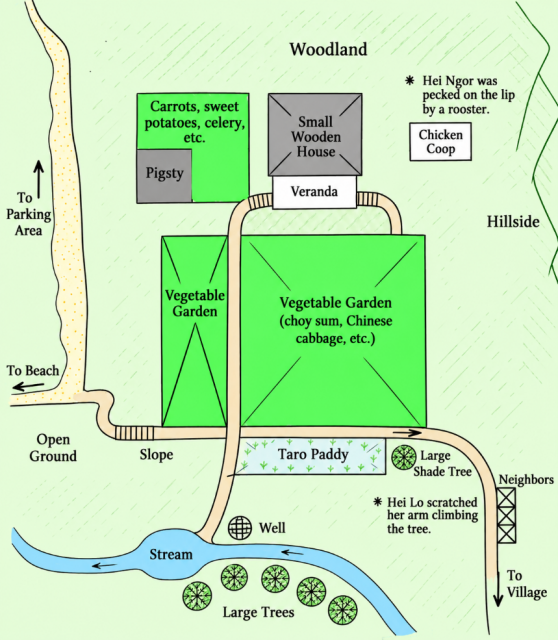
Sketch of Big Wave Bay village house in 1950s, by Peter Liu
-
- Video of Morris A. Cohen in 1960
- Recent news in the wartime diaries:
- 1942
- 27 Sep 1942. Just over 1800 POWs from Hong Kong start their journey to Japan, where they expect they’ll be put to work as manual labour. They notice the name of the ship they are boarding is the Lisbon Maru. Conditions in the holds are terrible.
- 1 Oct 1942. American submarine Grouper fires torpedoes at the Japanese ship Lisbon Maru, unaware that over 1800 allied POWs are on board. A torpedo strikes the ship, which starts taking on water. The Japanese crew and soldiers are removed to other ships, but they keep the POWs locked in the holds, only lowering a hand-pump to the POWs who must use it to slow down the rising waters.
- 2 Oct 1942. The POWs in the holds of the Lisbon Maru realise the ship is going to sink and decide to break free. Japanese ships nearby shoot and kill many of the men. Some men are rescued by local fishermen, and eventually the Japanese ships also start picking up men from the sea, but over 800 of the POWs who boarded the Lisbon Maru did not live to reach Japan.
- 27 Sep 1942. Just over 1800 POWs from Hong Kong start their journey to Japan, where they expect they’ll be put to work as manual labour. They notice the name of the ship they are boarding is the Lisbon Maru. Conditions in the holds are terrible.
- 1943
- 23 Sep 1943 : The second repatriation ship leaves Hong Kong. The Teia Maru sets sail with mostly Canadian repatriates, but also several from the USA and Latin America. [CORRECTION: Greg Leck notes that only the group who boarded at Hong Kong were 'mostly Canadian repatriates'. He says that the vast majority of the repatriates on the ship were from the United States, from camps throughout the Far East. Thanks to Greg for the correction.]
- 1945
- 2 Oct 1945. Mabel Redwood wakes up in Colombo, believing her fiancee is far away in Hong Kong. In fact he has also arrived in Colombo on board a different ship. There is a reunion, a wedding, and by that evening Mabel is a married woman with a new husband and a new name, Mabel Large.
- 1942
- Readers ask:
- Jo asks for information about The Swiss Inn on Gloucester Rd and The Mandarin Hotel, in the early 1970s when their father Ming-jai / Abel worked there as a chef
- Can anyone translate the Chinese notes on the back of this photo?
- Where was this photograph taken:
-

Hong Kong riots 1967, by Rogeroger
-
- Jo asks for information about The Swiss Inn on Gloucester Rd and The Mandarin Hotel, in the early 1970s when their father Ming-jai / Abel worked there as a chef
Places
(Click a Place's link below to visit its page - you'll see all the photos we have for it, and can add your memories of the Place to its comments.)
- Kowloon
- Hong Kong Island
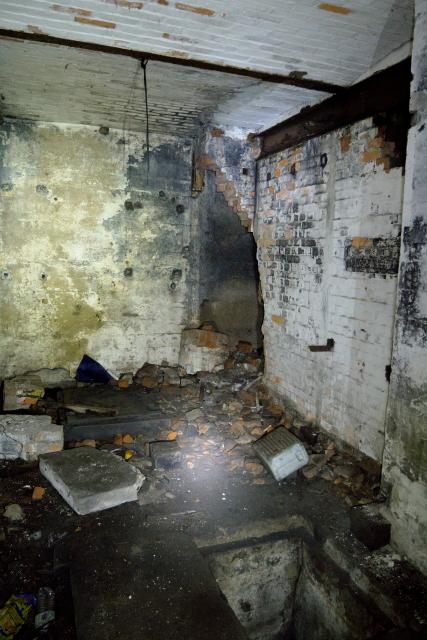
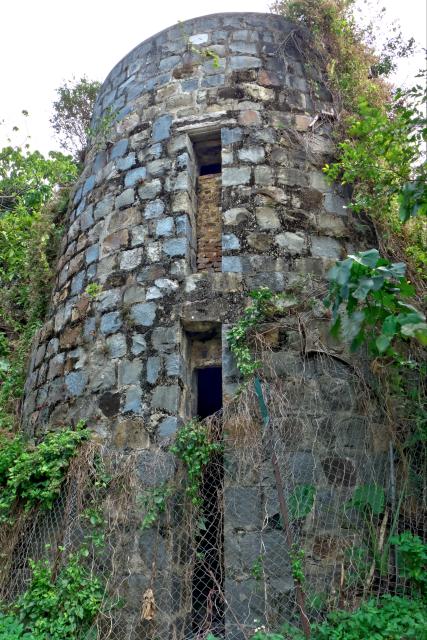
- Albany Filter Beds [1888- ]
- IL 358 - A suggested site for Queen’s College [????-c.1927]
- Kennedy Town Police Station / Infectious Diseases Hospital, Victoria Road [1889-????]
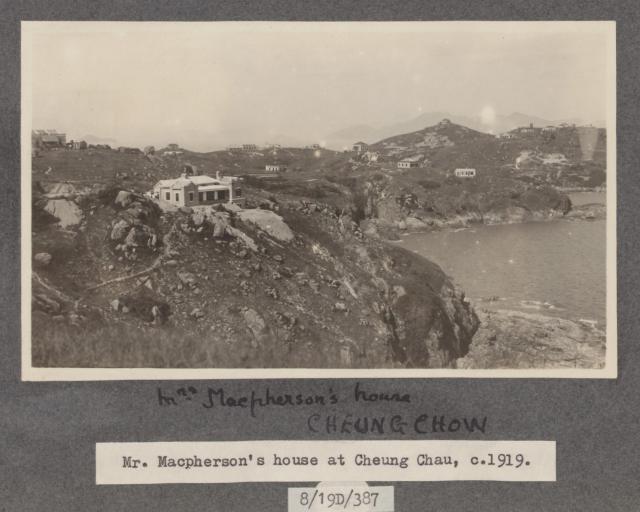
- Kingsclere / Kingsclere Hotel, Kennedy Road [c.1901-1924]
- Mint Dam [c.1866-????]
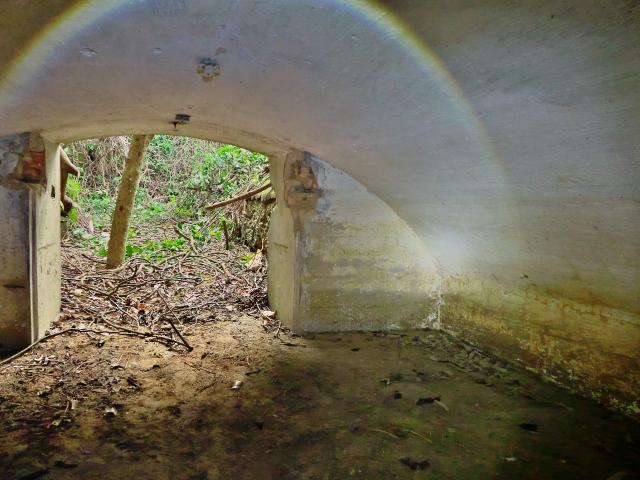
- Battery Plotting Room, Mount Davis Battery [1936- ]
- New Gaol, Old Bailey Street [1895-c.1982]
- Palm Villa - Pavilion [????- ]
- 3 Repulse Bay Road [c.1980-c.1993]
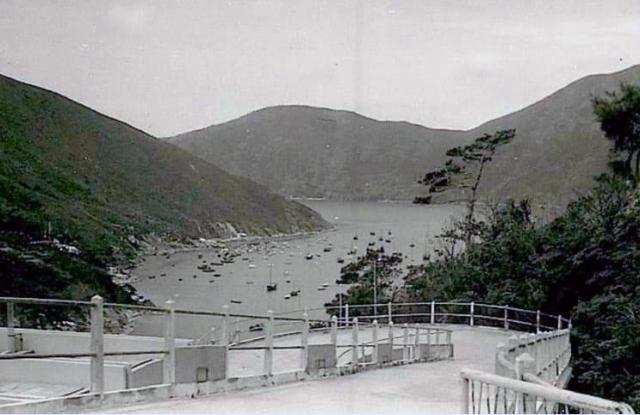
- 50 Repulse Bay Road (1st Gen) [c.1960-c.1999]
- Selbourne Villa, Kennedy Road [????-????]
- Streets
- Cross Lane (near Tai Yuen St.) [????-????]
- Cross Lane (near Tai Yuen St.) [????-????]
- Albany Filter Beds [1888- ]
Organisations & People
(Click a Person's link below to visit their page - you'll see all the photos we have for them, and you can add any memories of the Person or extra information in their comments.)
- Rex RAY [1875-1958], missionary
- Frederick James WITT [1887-1920]. A WW1 veteran, he died of Malaria in Hong Kong in 1920, and is buried at the cemetery in Happy Valley
-
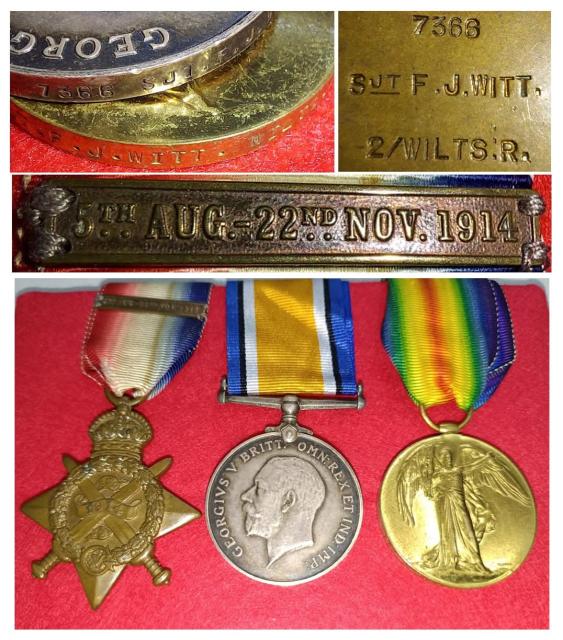
WWI "Mons Trio" Medal Group of Sgt. F. J. Witt (7366 2/Wilts R.)*, by Alan Ho
-
- WW2
- Stanley Camp
- Dawn Mary BERRY (née ROSE) [1931-2026]
- Miriam Kate SANH [1887-????], VAD
- Dawn Mary BERRY (née ROSE) [1931-2026]
- HKVDC
- Frank HILLON [1909-1994], sergeant, HKVDC
- William Ponsonby PULLEN [1914-????], gunner, 2nd Battery HKVDC
- Frank HILLON [1909-1994], sergeant, HKVDC
- Stanley Camp
Photos






Click to see all recently added photos.
乾隆古道 Qianlong Ancient Trail
Happy to have found the 乾隆古道 Qianlong Ancient Trail
Paul Tsang
Sunday 1 November 2026
The Qianlong Ancient Trail is located inside Lion Rock Country Park. Although it has no association with Emperor Qianlong, this stone paved ancient trail winding in the valley is rather legendary. Legend has it that in the old days, Sha Tin was abound in agarwood (Incense Tree).
Porters carried agarwood on their backs along this ancient trail and then transported them to the Hong Kong Island. There has been a saying that the name of Hong Kong is directly associated with incense trees. In that case, this ancient trail also added a sense of folklore to Lion Rock.
In Ming dynasty in southern Dongguan, all incense products made in Xin’an (including present-day Hong Kong, Kowloon and the New Territories) were all transported on land to the incense pier in Tsim Sha Tau (i.e. Tsim Sha Tsui), before they were shipped from Shek Pai Wan to Guangzhou, and then moved on land to Suzhou and Hangzhou for sales.
Since all incense products were centralised for freight forwarding, the port became known as Hong Kong – the port of incense.
In 1840, the British fleet arrived at the port and asked for its name. Fishermen living on boats at Aberdeen told them it was called Hong Kong (pronunciation same as Incense Port). Subsequently, China and Britain signed the Treaty of Nanking, and the name of Hong Kong was extended to cover the whole island. The English transliteration Hong Kong came from the Tanka accent of fishermen living on boats.
Published during the Jiaqing reign of Qing dynasty, an entry in the section “Produce – Wood” in the Gazetteer of Xin'an County mentioned, “Incense trees are grown in large quantities within the county; from the East route, those that originated from places such as Lik Yuen (Sha Tin ), Sha Lo Wan (north western Lantau) are better...” From this, one could see that Incense trees were grown, and incense were harvested and produced in quite many locations in the New Territories in early 19th century.
This ancient trail was the main route that villagers of Sha Tin and Tai Po villagers took to Kowloon. Villagers heading for Kowloon to source local and imported goods must travel along this ancient trail. Since Tai Po Road opened in 1902, villagers no longer need to climb mountains and ridges to travel between the New Territories and Kowloon.