Aw Boon Haw was a renowned Chinese entrepreneur and philanthropist, best known as the founder of Tiger Balm.
Born in Rangoon, Burma, in 1882, to Aw Chu-Kin, a Hakka herbalist from Fujian,China, Aw was the second son in a family that had migrated from China to escape war and poverty. The family operated a modest medicine hall, Eng Aun Tong, which provided affordable herbal remedies to the local and overseas Chinese community.
Although their father hoped both sons would receive an English education, Boon Haw was rebellious—often skipping school and getting into trouble, leading to his expulsion and return to China. Meanwhile, his younger brother Aw Boon Par continued his studies in Burma.
After their father's death, Boon Par took charge of the family business, and upon Boon Haw's return, the brothers worked together to improve their herbal ointment formula. Their collaboration resulted in the product Ban Kim Ewe—meaning "Ten Thousand Golden Oil"—which rapidly gained popularity as a remedy for various ailments.
In 1918, seeking broader appeal beyond the traditional Chinese market, the brothers rebranded their product as Tiger Balm. Through clever packaging and innovative marketing strategies—including cartoon commercialisation and public events—Aw Boon Haw made Tiger Balm a household name throughout Burma, China, Japan, and Southeast Asia. He was known as "The King of Tiger Balm," By this time, the Aw family had become one of the wealthiest in Rangoon.
In 1926, after disputes with British colonial authorities, Aw Boon Haw relocated to Malaysia and expanded his business across Southeast Asia with his brother. He established the Tiger Balm factory, Eng Aun Tong, in Singapore, and promoted his products by founding several newspapers and the Singapore Tiger Standard, which served as a promotional platform. The family's newspaper operations quickly spread to Penang, Amoy, Bangkok, and Hong Kong.
In 1932, Aw and his brother founded the Aw Par Hospital /St. John Hospital in Cheung Chau. The original building, a historical landmark, continues to serve the residents of the island.
Famed for his marketing genius, Aw Boon Haw was known for his flamboyant style—such as wearing 18-carat gold spectacles to appear more distinguished, though they were not needed. He drove a German NSU with a custom tiger head, attracting widespread attention. It was said that no animal had ever been so misrepresented as that tiger.
As Tiger Balm’s success soared, Aw expressed his gratitude to his brother by building Haw Par Villa, a grand mansion in Singapore, in 1935. Designed by architect Ho Kwong Yew, the villa featured the Tiger Balm Garden filled with thousands of statues and tableaux depicting scenes from Chinese myths and folklore filled with statues and scenes from Chinese mythology, reflecting Aw’s vision and appreciation for his heritage.
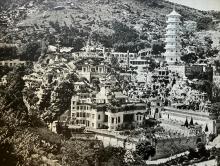
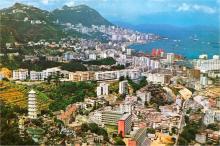
That same year in Hong Kong, he built Haw Par Mansion as his family's private home, while nearby another Tiger Balm Garden was created for public enjoyment.
The mansion showcased Chinese Renaissance architecture, blending Western and Chinese styles with a reinforced concrete structure, symmetrical layout, and features like porches and bay windows. Its elegant interior included Italian painted glass, detailed carvings, gilded accents, and murals with Indian and Burmese influences. The mansion has largely retained its original design over time.
In 1938 Aw Boon Haw was honoured with an OBE for his philanthropic endeavours and services in British Malaya and the Straits Settlements.
Back in Singapore, the villa was completed in March 1937, just before the Sino-Japanese War. Boon Par lived there only a few years before closing the factory and fleeing with his family to Rangoon when the Japanese Imperial Army invaded Singapore in 1942. He passed away there in 1944.
Aw Boon Haw moved to Hong Kong, managing the business from there.
After the war, Aw returned to Singapore, re-established the business, and diversified his ventures by founding Chung Khiaw Bank and acquiring Pulau Serangoon (now Coney Island).
In 1954, at the age of 72, Aw died from a heart attack following a major operation in Honolulu.
He is remembered through his work with Haw Par Villas throughout Asia, with locations in Singapore, Hong Kong, and the Fujian province of China.
Sources:
Conserve and revitalise Hong Kong Heritage (with pictures)
Photos that show this Person

Comments
1930s “Tiger” Car