[Updated 20/Apr/2026]
In the early 20th century, Cheung Chau was found to be the perfect setting for a holiday home for missionaries and other Europeans serving in China, avoiding the expense of returning to the homeland for a summer holiday each year. Cheung Chau properties offered cooling sea breezes, attractive vistas and isolation at a fraction of the cost of similar facilities in Hong Kong, and in 1908-10 cheap plots and labour saw a flurry of building on the island.
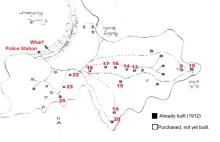
Going by the evidence of the 1919 Cheung Chau map, House #4C was not in place then, but was built between 1919 and 1924.
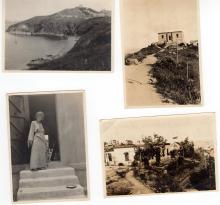
From the photographic evidence, it was a south-facing bungalow, with its back to the sea views north over Kwun Yam Wan. It had a verandah at the front, and if it was like all the other houses, it was built of locally quarried granite.
On top it had a timber hip roof. Hip roofs offer superior stability, durability, and wind resistance due to their four-sloped design, making them ideal for high-wind or hurricane-prone areas.
The house may well have suffered during the war what other European houses suffered, ie being stripped by the locals of all wood for fuel, and then blown up by the Japanese as being western-owned.
The site is now the home of the Caritas Jockey Club Oi Fai Camp, a charity whose aim is to offer campers (youths, adults, families) activities that support their physical, mental, and social well-being.
Source:
Photos that show this Place