Reverend Arthur Henry Bray was a Wesleyan Methodist missionary in South China, who later became a prominent figure in the Chinese Methodist Church in Hong Kong. He was gifted as an educationalist, a builder and architect, and as a pastor (Donald Childe).
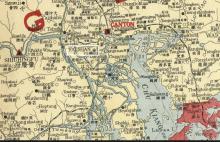
Born on 22nd Oct 1886, he served for 2 years at Didsbury College in Manchester. Then in 1914 he was called to missionary work in the South China District. He went to Fatshan (now Foshan), about 9 miles west of Canton, to develop Haigh College (Wah Ying). He also helped to develop the Fatshan Girls's Boarding School and the rebuilding of the Fatshan City Church. He and Mrs Bray met many families who would later reconnect with them in Hong Kong.
Known to the Chinese community as Lai Bak Lim (黎伯亷), he spent many years in Fatshan.
On 30th Nov 1921 he married Edith Campbell, who was a missionary with the Women's Auxiliary in Hupeh, a province in Central East China.
In 1935 Bray was called to fill a special role with the Hong Kong Chinese circuit and worked with Arthur J May, the Missionary Society's architect, to plan and build the central church in Wanchai, Hong Kong. May went on to co-design the Methodist Missionary Society's headquarters in London in 1939.
That same year Bray returned to Fatshan as Chair of the District. He was interested in encouraging individuals, and in promoting Chinese leadership in the Church.
In 1937, the schools in Fatshan were flourishing, for example there was a newly established Science Department. The Hospital was growing and there was a Nurses Training School. However, in September 1938 the schools moved to Hong Kong due to the fear of invasion by Japan.
The Brays left China in July 1939 and Arthur then served in the Aberystwyth and London Finchley circuits.
Postwar they returned to Hong Kong in 1949. Bray served as the Chairman of the Chinese Hong Kong District from 1949 until 1952.
In the 1950s, although by now retired, he was tasked by the Methodist Missionary Society to supervise the construction of the Chinese Methodist Church and school on Gascoigne Road, Yaumati, Kowloon.
The Brays lived in the Sailors’ and Soldiers’ Home in Wanchai. They were popular members of the Wanchai Chinese Methodist Church.Rev Bray was known for preaching in flawless Cantonese, without any trace of a foreign accent, and for the constant smile he brought to every interaction.
The Brays’ eldest son Denis was born in Hong Kong and later came to Hong Kong to join the colonial government, becoming a senior colonial civil servant and Cabinet member.
Like many South China missionaries, the Brays owned a holiday home on Cheung Chau, House #24, which they passed on to son Denis and which was given to the Methodist Church in 2005 when he left Hong Kong.
Rev Bray documented his time in China extensively. His 1920s cine-films, capturing village life around Fatshan and the construction of the Chinese Methodist Church in Wanchai, are preserved in the Hong Kong Film Archive.
In later years the Brays retired to Leighton Buzzard in England.
This piece written from information found elsewhere on Gwulo.
Later updated thanks to information from Lesley Shapland of the SOAS Special Collections Department.
Comments
Arthur Henry Bray 1886 -
Passenger List Hong Kong to San Francisco Destination New York 1921
Arthur Henry Bray age 34 Single Born Ledbury England. Occupation Missionary. Relative or Friend in England Mrs T Bray Longford, Ledbury
UK Birth Index
Arthur Henry Bray registered Ledbury Quarter 4 1886
Passenger List London to Hong Kong 1927
Arthur Henry Bray age 41 Missionary (Methodist)
Edith Muriel Bray age 35 [Edith Muriel Campbell 1892-1974]
Dennis (sic) Campbell Bray age 1
Barbara Muriel Bray age 1
Facebook Info
Jenny Salsbury
Rev Arthur Henry Bray - overview
[Updated 26/May/2026]
Reverend Arthur Henry Bray was a Wesleyan Methodist missionary in South China, who later became a prominent figure in the Chinese Methodist Church in Hong Kong. He was gifted as an educationalist, a builder and architect, and as a pastor (Donald Childe).
Born on 22nd Oct 1886, he served for 2 years at Didsbury College in Manchester. Then in 1914 he was called to missionary work in the South China District. He went to Fatshan (now Foshan), about 9 miles west of Canton, to develop Haigh College (Wah Ying). He also helped to develop the Fatshan Girls's Boarding School and the rebuilding of the Fatshan City Church. He and Mrs Bray met many families who would later reconnect with them in Hong Kong.
Known to the Chinese community as Lai Bak Lim (黎伯亷), he spent many years in Fatshan.
On 30th Nov 1921 he married Edith Campbell, who was a missionary with the Women's Auxiliary in Hupeh, a province in Central East China.
In 1935 Bray was called to fill a special role with the Hong Kong Chinese circuit and worked with Arthur J May, the Missionary Society's architect, to plan and build the central church in Wanchai, Hong Kong. May went on to co-design the Methodist Missionary Society's headquarters in London in 1939.
That same year Bray returned to Fatshan as Chair of the District. He was interested in encouraging individuals, and in promoting Chinese leadership in the Church.
In 1937, the schools in Fatshan were flourishing, for example there was a newly established Science Department. The Hospital was growing and there was a Nurses Training School. However, in September 1938 the schools moved to Hong Kong due to the fear of invasion by Japan.
The Brays left China in July 1939 and Arthur then served in the Aberystwyth and London Finchley circuits.
Postwar they returned to Hong Kong in 1949. Bray served as the Chairman of the Chinese Hong Kong District from 1949 until 1952.
In the 1950s, although by now retired, he was tasked by the Methodist Missionary Society to supervise the construction of the Chinese Methodist Church and school on Gascoigne Road, Yaumati, Kowloon.
The Brays lived in the Sailors’ and Soldiers’ Home in Wanchai. They were popular members of the Wanchai Chinese Methodist Church. Rev Bray was known for preaching in flawless Cantonese, without any trace of a foreign accent, and for the constant smile he brought to every interaction.
The Brays’ eldest son Denis was born in Hong Kong and later came to Hong Kong to join the colonial government, becoming a senior colonial civil servant and Cabinet member.
Like many South China missionaries, the Brays owned a holiday home on Cheung Chau, House #24, which they passed on to son Denis and which was given to the Methodist Church in 2005 when he left Hong Kong.
Rev Bray documented his time in China extensively. His 1920s cine-films, capturing village life around Fatshan and the construction of the Chinese Methodist Church in Wanchai, are preserved in the Hong Kong Film Archive.
In later years the Brays retired to Leighton Buzzard in England.
This piece written from information found elsewhere on Gwulo.
Later updated thanks to information from Lesley Shapland of the SOAS Special Collections Department.