Peak Water Services Reservoir - Water Rationing on Barker Road

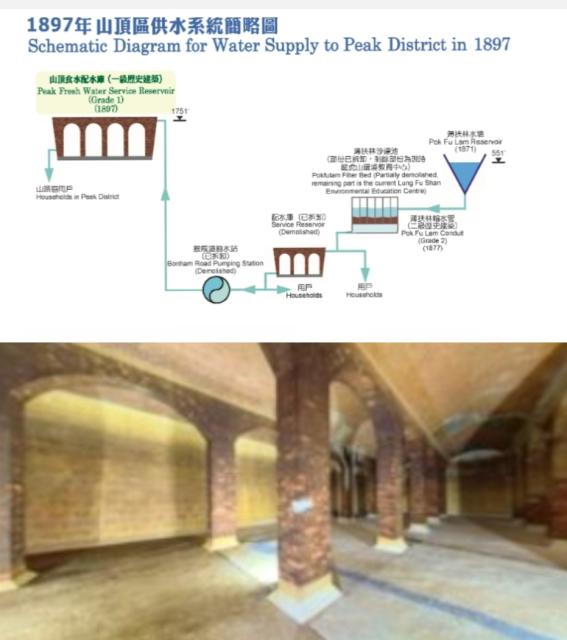
1897, the Peak Fresh Water Service Reservoir is the first service reservoir built in Hong Kong’s Peak District. Capable of holding 409,000 gallons, it provided a crucial and steady water supply to residents, replacing smaller, vulnerable iron tanks.

Source WSD

Date picture taken
unknown

Comments

Heritage Status: In recognition of its architectural and engineering significance as a century-old facility, it was proposed for Grade 1 historical status by the Antiquities Advisory Board.

Water supply to Victoria Peak in the 1960s was entirely dependent on gravity-fed water from high-altitude reservoirs like the Pok Fu Lam and Tai Tam systems. Due to devastating droughts, residents frequently faced strict rationing—as severe as just 4 hours of water every 4 days—requiring continuous reliance on mainland imports. 

The Gravity-Fed System

Because of the extreme elevation of the Peak, direct pumping from the city center was impossible. The colonial government relied on the gravitational flow of water sourced from higher elevations:

  • Storage Hubs: Water was primarily drawn from the nearby Pok Fu Lam Reservoir (built in the 1860s) and the Tai Tam Reservoir network.
  • Distribution: Water flowed down into the Peak Fresh Water Service Reservoir (completed in 1897) and the Mount Gough Fresh Water Service Reservoir (1903). From these underground cisterns, it was gravity-fed to the mansions, hospitals, and police stations of the Peak District. 
 
Because Victoria Peak sits at a high elevation, residents faced unique challenges and adaptations during this era:
  • Gravity Fed Supply: The Peak relied heavily on pumping stations and local catchment systems, but during the 1960s droughts, the hilltop reservoirs ran completely dry. Water had to be rationed and pumped strictly on rotational schedules. 
  • Widespread Panic: Lower elevations received water first, so Peak residents were frequently at risk of taps running completely dry if pressure dropped before their allotted four hours arrived. 
  • Colonial Adaptations: To survive the 1963 "water famine," the British colonial administration took drastic measures. They introduced massive public rationing, began importing water from China's Dongjiang (East River) in 1964, and launched an initiative to flush toilets with seawater. 


A sea water flush system works by pumping untreated ocean water through a dedicated plumbing network. While it conserves freshwater—a practice dating back to 1950s/1960s in Hong Kong.

Why Does It Smell?

  • Sulfate Reaction: The sulfur naturally present in seawater reacts with organic waste. As the water sits in the bowl, tank, or supply lines, it breaks down and creates a characteristic "rotten egg" or stagnant ocean smell.
  • Salt & Scale Build-up: Saltwater leaves behind mineral deposits in the rim jets and pipes. When mixed with organic matter, this rough buildup creates a prime breeding ground for odor-causing bacteria.