In the second half of 1928, there was only 58 mm of rainfall and from January to mid-July in 1929, only another 40 mm of rainfall was recorded (between October 1924 and March 1929, there was almost no rainfall at all). Despite all the reservoirs being full in the summer of 1928, the lack of rain led to a dramatic fall in water levels. The beginning of the wet season in April 1929 did not bring the desired precipitation. All reservoirs on Hong Kong Island except Tai Tam Tuk dried up.
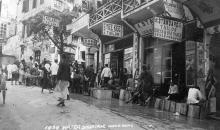
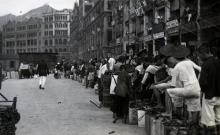
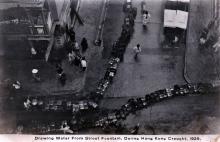
To prevent the water supply from collapsing in the medium term, the government introduced water-saving measures which culminated into water rationing in April 1929. The water mains were closed and people had to get water from public standpipes. The maximum allowance per day and person were two 4-gallon (18 litre) buckets.
The government tried to increase the water supplies by (re-)opening of well, constructing new water tanks and shipping fresh water from e.g. Lai Chi Kok.
Fortunately for the people of Hong Kong, strong rainfall started on the 11 July 1929 and continued in the following days. This led to an easing of the situation and subsequently made it possible to lift the rationing measures.
Sources and further reading:
Droughts in Hong Kong
Hot & thirsty: the struggle to supply Hong Kong with drinking water
THE COLONY’S WATERWORKS.
Water shortage emergency
Photos of this event: