The Hong Kong and Singapore Battalion Royal Artillery (HKSRA)—known historically as the Hong Kong and Singapore Royal Garrison Artillery—had an authorized establishment varying between 240 and 280 men (Sikh and Punjabi personnel) in its early mountain batteries.
During WWII, an expanded force of approximately 830 Indian other ranks alongside British officers served in the unit during the 1941 Battle of Hong Kong.
Type
Armed services
Status
Inactive
Date organisation created
(Day & Month are approximate.)
Date organisation closed
(Day & Month are approximate.)
Photos of this organisation:
(see more)Photos of this organisation:
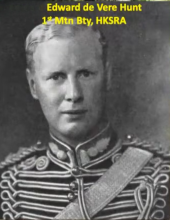
1930s
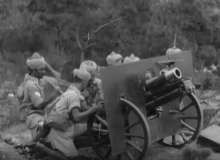
1930s
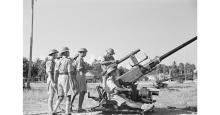
1941
Has member(s)
Comments
Hong Kong and Singapore Royal Artillery (1847 to 1946)
The Hong Kong and Singapore Battalion Royal Artillery (HKSRA)—known historically as the Hong Kong and Singapore Royal Garrison Artillery—had an authorized establishment varying between 240 and 280 men (Sikh and Punjabi personnel) in its early mountain batteries.
During WWII, a larger expanded force of approximately 830 Indian other ranks alongside British officers served in the unit during the 1941 Battle of Hong Kong.
The Hong Kong and Singapore Royal Artillery (HKSRA) was a regular colonial military unit raised by the British in the mid-19th century. Primarily manned by Indian soldiers (predominantly Sikhs and Punjabi Muslims), it was crucial for the coastal, mobile, and anti-aircraft defense of Britain's strategic Far Eastern colonies.
Origins and Early Years (1847–1900s)
• Formation: The corps traces its origins back to 1841 when the Madras Army recruited Indian workers known as "China Gun Lascars" to handle artillery in Hong Kong, as the climate was difficult for British troops.
• Official Establishment: In 1847, the Hong Kong-Singapore Artillery was formally established.
• Imperial Unit: By 1908, all gunners were recruited from the Punjab, and the unit was officially designated as the Hong Kong-Singapore Battalion Royal Garrison Artillery.
Expansion and World War I
• Global Deployments: Though originally intended for Far East service, the corps saw heavy action in the Middle East during the First World War. Its mountain batteries served with the Imperial Camel Corps in Palestine, the Sinai, and Egypt.
The 1930s and World War II (1940s)
• Corps Expansion: In the 1930s, as the Royal Navy expanded its bases in Singapore, the unit was expanded, reformed, and renamed the Hong Kong and Singapore Royal Artillery.
• WWII Combat: By December 1941, the HKSRA included multiple mountain, medium, coast, and anti-aircraft batteries stationed across Hong Kong, Malaya, and Singapore.
• Fate: The majority of the corps was lost to the Japanese invasion during the fall of Hong Kong (December 1941) and Malaya/Singapore (February 1942). Many of its surviving members were subsequently absorbed into the Indian National Army (INA).
Post-WWII Legacy
• Final Years: The last remaining elements of the HKSRA saw action against the Luftwaffe in the Levant and the Middle East before the corps was officially disbanded in 1946.
HKSRA casualtie figure
During the December 1941 Battle of Hong Kong, the Hong Kong and Singapore Royal Artillery (HKSRA) suffered a total of 292 casualties.
Out of an estimated unit strength of 830, this total included 144 killed, 45 missing, and 103 wounded
Charles Edward Barman
Charles Edward BARMAN [1901-1987] | Gwulo – member of HK SRA; and author of Resist to the End: Hong Kong, 1941-1945
Added
w thanks
re: Hong Kong and Singapore Royal Artillery (1847 to 1946)
Please can you let us have the source for that comment? It says that the HKSRA was "a larger expanded force of approximately 1,200 Indian other ranks" in 1941, which disagrees with the number 830 given at https://gwulo.com/node/38732, so it'll be good to check the source.
aligned w thx
source ref
https://ra39-45.co.uk/units/hong-kong-singapore-regiments-ra