Sex
Male
Status
Deceased
Dates of birth & death from the Dictionary of Hong Kong Biography.
Admiral Chan Chak was a central figure in the group that escaped from Hong Kong after the Japanese victory in December 1941. The group left Hong Kong on several British Motor Torpedo Boats, sailed to the China coast in Mirs Bay, then traveled overland until they had escaped the Japanese and reached Nationalist China forces.
Read more about Chan Chak and the escape at: http://www.hongkongescape.org/
Photos that show this Person
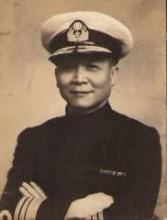
1930s
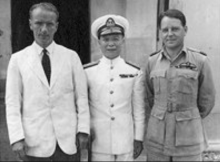
1940s
Comments
Admiral Chan Chak (KBE) - Escape from Hong Kong 1941
Chan Chak KBE (Chinese: 陳策; born Chen Mingtang; 陳明唐; 2 April 1894 – 31 August 1949), was a Chinese admiral of the Republic of China Navy, best known for his role in a breakout in five Royal Navy torpedo boats from the Japanese occupation of Hong Kong on Christmas Day 1941.
Chan flee to Hong Kong during WW2, and was given command of the five remaining Royal Navy Motor Torpedo Boats. In Aberdeen Harbour he and his entourage boarded the motor launch Cornflower II; while on the way to a rendezvous with the torpedo boats waiting south of Ap Lei Chau it was fired upon by Japanese forces.
Chan ordered “Abandon Ship”, threw off his artificial leg, only to be shot at the left wrist; barely able to swim with one arm and one leg, he was dragged ashore by his aide-de-camp, Lieutenant-Commander Henry Hsu. The torpedo boats came to their rescue, then headed towards Mirs Bay at high speed. From there the escapees, with the help of Chinese guerrillas, walked for four days through Japanese-occupied territories towards Huizhou in unoccupied China.
Altogether sixty-eight British, Chinese and Danish intelligence, naval and marine personnel were saved in the breakout, including David Mercer MacDougall, who had worked with Chan on intelligence matters. For aiding in the escape of these British military personnel, Chan was made an honorary Knight Commander of the Order of the British Empire on 19 August 1942.