The Meng Xue Shu Ju (School of Classical Studies for Children) announced its operations for the Renyin year. Mr. Chen Zibao and Mr. Chen Zishao continued to teach at No. 83 Holland Garden, Macau. Mr. Chen Zibao was responsible for the junior class, while Mr. Chen Zishao taught the senior class. Annual tuition fees were 10 yuan for the senior class and 18 yuan for the junior class. For students requiring board and lodging, the annual rent was approximately 12 yuan, with monthly food expenses around 4 yuan. This announcement was made in the winter of the Guangxu Xinchou year.
Dr. Yin Wenkai announced his decision to establish a private medical practice. He recounted that since the Dingyou year, he had resigned from a teaching position at Beiyang Medical College and subsequently served for five years at the Alice Ho Miu Ling Nethersole Hospital in Hong Kong. During his time at the hospital, he often found himself unable to attend to friends and relatives due to his demanding duties, a situation he deeply regretted. To fully dedicate himself to his profession and serve the public, Dr. Yin will hand over his hospital responsibilities by January of the upcoming Western calendar year. He will then open his own clinic, where he will be available for consultations and treatments at any time, morning or evening. He humbly requested public understanding of this new endeavor. His clinic is located at No. 54, Peel Street, 4th floor, accessible from Gage Street. This announcement was made by Dr. Yin Wenkai on December 23, 1901.
An advertisement for Mr. Luo Xingji's newly compiled English learning materials. His book, "English Made Easy" (or similar title), which was previously very popular and quickly sold out, has been revised and newly printed using Western methods. This updated edition is highly recommended for those learning English, with each set priced at one yuan. The book meticulously explains English pronunciation, ensuring consistency with English phonetics, and provides detailed guidance for each sound. It is designed to be a clear and accessible guide, serving as an excellent stepping stone for beginners. The book is available for purchase at Jin Fu Hao, Ju Jiao Wei, Wen Yu Tang, Wan Juan Lou, and Shuangmen Di Sheng Shu Lou.
Guang Li Xiang, located at No. 17 Main Road, Central, Hong Kong, advertised a range of photographic instruments, equipment, and chemicals. The store emphasized that its prices for equipment were exceptionally reasonable. This advertisement was published on the 17th day of the month.
An announcement from Hong Kong: An academy, initially referred to as a painting academy, has been established behind Man Mo Temple. It is now completed and scheduled to open soon. We hope for the enthusiastic support of all gentlemen, officials, gentry, and merchants. We are deeply grateful for all contributions and urge early donations. Our sincere intention is to contribute to the nation's progress. We pray that this esteemed academy will grow daily, fostering public morality, deepening public wisdom, and strengthening national capabilities. Students who study politics, law, diplomacy, and military preparedness will advance daily, thereby enhancing the nation's virtue, wisdom, and talent, leading to a stable and orderly society. The academy's system is unique, yet its educational methods, as described in ancient texts, are aligned with modern teachings. The imperial court is currently reforming politics and striving for national strength, and we are delighted by your patriotism and hope for the assistance of officials, gentry, and merchants to ensure its success.
The following is a list of esteemed patrons and general managers: Zhang Bishishi, Lu Guanting, Yang Peishan, Liang Renfu, Mai Zhao, Deng Liping, Zhao Heng'an, Yu Guopu, Rong Zhaolian, Tang Liang, Feng He, Chen Xuan, Huang, Chen Douyuan, Wu Shiyong, Wang Ziying, Jiang Shikai, Chen Yongyu, Xu Shun, Lao Shaoqiao, Lin Bingyuan, Li Zhuosheng, Wu Xinting, Li Tianrong, Zheng, Wen Junchen, Zhou Daxuan, Deng Jingquan, Wu Dingchen, Wu Ganqing, Tian, Fu Xingya, Li Feng, Ma Biao, Wu Dongchang, He Xingwei, Zhang Jian, Lin Shiquan, Lin Yaofan, Chen Qiu, Xie Gechen, Li Jianting, Huang Zhu, Huo Jianquan, Li Mengkuan, Zhao Laichen, Wu Ting, She Chen, Lei Gan, Xiang Huixingcun, Huang Zhongshi, Chen Zanting, Zhou Ruiyuan, Zheng Qianchu, Feng Chang, Huang Lichuan, Wu Jiewei, Chen Qiming.
From Kaiping County: Guo Yicao. From Xinzhu County: Wang Yizun. From Xiangshan County: Shen Yizun. Tang Weiqing Zhongcheng. Xiang, Liang Meixi, Liang Yungong, Su Gongxi, Zhang Zhinong, Zhang Bo, Zhang, Huang Yisan, Luo Zishou, Liang Nanpo, Wen Dajing, Gui Nanping, He, Feng Xiaoxiang, Xiang Yunxi, Feng Jinrong, Feng Jiyou, Zhu Guangcheng, Liang, Zhen Guoxiang, Huang Chaoliu, Li Mingfu, Rong Zimu, Feng Nian, Pu, Wen Ganting, Wu Rongxiang, Huang Guodong, Li Xisui, Chen Yantang, Feng, Lao Douyuan. From Guangdong Treasury: Puyuan Yin Ruan Licun. From San Francisco: Zhu Kongshe.
The following are names of those who initiated the construction: Xi Jiali, Qing Su, Ren, Luo Yusheng, He Maihua, Du Tingzhang, Chen Youyu, Cao Song, Wen, Weichuan.
The above list of esteemed names will be added as they arrive; please excuse any disorder in the sequence.
This announcement is dated the second month of the Guangxu 28th year (1902).
The Red Apricot Grove (紅杏林) announces its grand opening! We offer a unique haven for leisure and enjoyment, a picturesque setting for poetry and wine, where guests can fully immerse themselves in the beauty of the seasons. Our magnificent establishment, with its towering structures and ornate pavilions, offers breathtaking views of both the sea and the verdant mountains. We pride ourselves on a fusion of European and Asian cuisine, prepared by master chefs, and a selection of exquisite wines. Whether you wish to explore culinary delights, delve into tea culture, enjoy fine wine, listen to music, or be entertained by enchanting dances and songs under the moonlight, the Red Apricot Grove promises an unforgettable experience. We invite all esteemed guests to grace us with their presence. The Red Apricot Grove is located at the entrance of Tai Ping Shan West Street and is scheduled to open on the 24th of the second month. This announcement is made by the proprietor of the Red Apricot Grove on the 22nd day of the second month of the Ren Yin year (1902).
Subject: Rev. Dr. Charles R. Hager and the Mission School Fund on Man Mo Street (April 1902)
Body:
I would like to share an important archival record from the Chinese Mail (Wah Tsz Yat Po / 華字日報) dated April 3, 1902 (光緒二十八年二月廿五日). This clipping provides valuable insight into early colonial education in Sheung Wan, specifically regarding a local school fund managed by Rev. Dr. Charles Robert Hager (喜嘉理牧師).
Historical Context & School Location
The newspaper notice details a fundraising donation list for an Anglo-Chinese day school or mission school located at Man Mo Street (文武街).
The Location: In 1902, "Man Mo Street" was the popular local Chinese designation for the neighborhood directly surrounding the Man Mo Temple in Sheung Wan, encompassing portions of modern-day Hollywood Road, Square Street, and Ladder Street. [1, 2, 3]
The Mission Connection: This school was part of the network operated by the American Board of Commissioners for Foreign Missions (ABCFM / 美部會 / 綱紀慎會). It should not be confused with the Canton Christian College (Gezhi Academy/格致書院), which had temporarily retreated from Guangzhou to Macau between 1900 and 1904 due to the Boxer Rebellion. Instead, this was a localized grammar/chapel school serving the Chinese community in Sheung Wan.
Rev. Hager’s Role as Head of the Donation Pool
In the 1902 announcement, Rev. Hager is prominently listed at the helm of the fundraising initiative.
The Title Nuance: While Western missionaries generally avoided formal titles like "Chairman" on localized political or merchant-led donation boards to maintain neutrality, the Wah Tsz Yat Po marks Hager as the "掌理" (Manager/Director) and "收啟人" (Authorized Receiver) of the school's funds.
Functional Leadership: Because he held the ultimate fiscal and structural authority over the American Board's properties in Hong Kong, local contributors and Chinese Christian elders (including figures linked to the broader revolutionary and educational circles of the era) handled the collection under his direct oversight. Consequently, in contemporary public accounts, he operated as the functional Chairman of this specific educational donation drive.
This record serves as an excellent reference for mapping out the precise locations of 19th and early 20th-century mission schools in the Tai Ping Shan/Sheung Wan districts, as well as tracking Rev. Hager's deep administrative footprint in Hong Kong's early English-teaching ecosystem. [1, 2, 3]
Youth Lin Fu was charged with riding a bicycle on Chatham Road in Hung Hom on the 25th without having lit the lamp on the bicycle. The magistrate sentenced him to a fine of seven dollars or fourteen days in prison.
**Approved by the Ministry of Education** **Republic Textbooks** **Secondary School English Reader**
---
### **Description** This textbook series is compiled in accordance with the new educational system, comprising four volumes in total. All contents are selected from renowned English and American readers and historical records.
In each lesson, new vocabulary words are highlighted with phonetic symbols and Chinese translations to facilitate pronunciation, spelling, and definitions. Additionally, exercises on grammar, translation, conversation, fill-in-the-blanks, and error correction are included to teach sentence structure and composition, serving as practical exercises for immediate application. Chinese annotations focus on individual words, and a comprehensive glossary is appended at the end of the book for convenient reference.
---
### **Official Evaluation** > "The difficulty level of this book is appropriate. The grammar, sentence-building, and conversation exercises at the end of each lesson are all derived directly from the lesson text, ensuring students benefit fully from every single lesson. The editorial design shows great care and effort; it is hereby approved for use as a middle school English textbook."
### **1. Top-Quality Pure Peppermint Oil** * **Price:** Large bottle: 50 cents | Small bottle: 20 cents * **Details:** There are many types of peppermint oil on the market, but everything depends on refined distillation. What others sell cannot compare to Watson's. Pure, mild, and rich in quality, it deserves praise for its miraculous efficacy. It treats colds, dizziness, alternating chills and fever, frequent cold-induced coughing, vomiting accompanied by diarrhea, sudden severe abdominal pain, asthma with shortness of breath, and illness caused by pestilential mountain mists. It rapidly neutralizes toxins and miasma. Suitable for both oral intake and topical application, it brings relief to both mild and chronic ailments. If used according to directions, it proves effective every single time. Try it once to experience its superior power over other brands. An essential remedy for home and travel—purchase it to keep with you at all times.
---
### **2. Cold & Flu Snuff** * **Price:** 10 cents per box * **Details:** When a cold strikes the head, a runny nose is inevitable, leaving one leaning miserably at their desk from the chill. Ancient remedies favored grinding herbs into snuff; today, we manufacture this medicine combining Western methods with traditional heritage. Mild ailments can be treated directly through the nasal passages. It brings fast, miraculous relief for cold-induced headaches, nasal congestion, and related symptoms. Affordable, fast-acting, and an essential item to carry—no exaggerated claims!
---
### **3. Indigestion & Stagnation Liquid** * **Price:** 50 cents per bottle * **Details:** Indigestion and food stagnation cause extreme discomfort, distressing breath and damaging stomach health. Left untreated, it can turn into a severe, deeply rooted condition. At the very first sign of symptoms, one must treat and prevent it immediately. Taking this liquid mixture restores health right away—it eases breathing, stimulates the appetite, and shows immediate, visible results.
---
### **4. Cough Lozenges (Pastilles)** * **Price:** Large bottle: 25 cents | Medium bottle: 20 cents | Small bottle: 15 cents * **Details:** Coughing and wheezing are stubborn afflictions, suitable for men, women, young, and old alike. Whether it is chronic long-term coughing, day-and-night coughing, cold coughs, feverish asthma coughs, consumptive pulmonary coughs, cold-induced coughs, coughing up blood, hoarse wheezing, frequent short-breathed coughs, painful hacking coughs, chest-pain coughs, or phlegm-induced coughs—taking these lozenges never fails to stop coughing. It is the premier remedy for easing breathing and resolving phlegm.
---
### **5. Rheumatic Ailments Liquid Medicine** * **Price:** Large bottle: $1.25 | Medium bottle: 50 cents | Small bottle: 25 cents * **Details:** Rheumatic conditions are extremely common, usually caused by carelessness in daily living and diet. Neglected early on, they turn into chronic, painful afflictions causing aching bones and joints, restricted mobility, or swelling in the limbs. Pain is doubled if aggravated by alcohol consumption. If not cured quickly, it causes lifelong misery. Purchasing this medicine for treatment rapidly stops pain and restores health. Countless people have been cured—tens of thousands of bottles are sold annually. It also helps treat venereal conditions, skin sores, buboes, bone pain, and urinary blockages. Taken three times daily, its swift effectiveness is extraordinary.
---
### **Store & Distribution Notice** * **Notice to Customers:** Please look for our official registered trademark when purchasing to ensure authenticity. * **Branches & Agents:** Available at branch stores and authorized agents across all provinces and ports. * **Hong Kong Sales:** Available at Watson's Hong Kong branches, major department stores, and Western pharmacies. * **Main Depot:** Published by A.S. Watson & Co. Pharmacy, No. 1 Stanley Street, Hong Kong.
**Prosecuted for Partitioning Ground Floors with Wooden Boards**
Yesterday morning, an assistant sanitary inspector prosecuted residents living on the ground floors of buildings around Second Street, Sai Ying Pun. Five or six households were charged with partitioning their ground-floor rooms with wooden boards, which violates Sanitary Board regulations.
The magistrate heard the case yesterday morning. The defendants are listed as follows: (1) No. 6, Yuen Shing Lane, Sai Ying Pun; (2) No. 95, Third Street; (3) No. 10, Third Street; (4) No. 99, Second Street; (5) No. 5, Fuk Luk Lane; (6) No. 7, Fuk Luk Lane; (7) No. 64, Third Street. A total of seven households.
According to the inspector's testimony to the magistrate, the ground floors occupied by the defendants were not previously used for commercial business, and partitioning rooms with wooden boards was strictly forbidden. After the partitions were put up, warning notices were repeatedly issued to stop them and order immediate removal. However, the defendants ignored the notices and treated them as mere paper promises.
The magistrate sentenced the resident of No. 10, Second Street to a fine of 2 dollars, and each of the remaining defendants to a fine of 3 dollars.
The Violation: Seven households were prosecuted for illegally partitioning their ground-floor rooms using wooden boards.
The Location: The targeted zone was centered around Second Street and Third Street in Sai Ying Pun, a densely populated working-class neighborhood. The specific addresses listed include:
No. 6 Yuen Shing Lane (源盛里6號)
No. 95 Third Street (第三街95號)
No. 10 Third Street (第三街10號) (Note: Sentenced as "No. 10 Second Street" in the judgment line, likely a typographical error in the original newspaper record).
No. 99 Second Street (第二街99號)
No. 5 Fuk Luk Lane (福祿里5號)
No. 7 Fuk Luk Lane (福祿里7號)
No. 64 Third Street (第三街64號)
The Penalties: The tenants ignored multiple written warnings from the Assistant Sanitary Inspector. The Magistrate imposed a fine of 2 to 3 dollars per household. While 3 dollars sounds small today, in 1915 it represented a significant penalty—roughly equivalent to several days' to a week's wages for an ordinary working-class laborer.
🏛️ Crucial Historical Context (1915): The Battle Against Plague
The Anti-Plague Regulations: Why was the government so incredibly strict about wooden partitions on ground floors? Between 1894 and the late 1920s, Hong Kong was ravaged by catastrophic outbreaks of Bubonic Plague (鼠疫). Ground floors were the frontline. The Sanitary Board discovered that dark, unventilated, illegally partitioned wooden cubicles created the absolute perfect breeding ground for rats and fleas.
Light and Air Enforcement: To combat the plague, the government passed strict Public Health and Buildings Ordinances. These laws mandated minimum requirements for natural light, ventilation, and open air space. Constructing unauthorized wooden rooms blocked windows and air shafts, turning tenements into deadly, claustrophobic health hazards.
The Rise of "Subdivided Units" (劏房): This document proves that Hong Kong's contemporary crisis of subdivided flats and cubicle apartments is not a modern phenomenon. Even in 1915, low-income tenants routinely used cheap wood to partition large rooms into smaller sub-lets to offset the steep, rising rental costs in the urban core.
Valuable property situated in Victoria City, Hong Kong, is to be sold by public auction by auctioneer Mr. Lemm at his auction room on Duddell Street, on Wednesday, 5th January 1916, at 3:00 p.m., under Lot No. 318.
**Details of the Property:**
**Lot No. 1** The whole remaining section of a parcel of land, to be registered at the Land Office as Inland Lot No. 409, Section B, together with the building erected thereon, being No. 35 McGregor Street, Wan Chai. The area of the said land is approximately 808 square feet. The annual Crown rent payable is 12 dollars, 1 dime, and 2 cents ($12.12).
The Date and Time: Wednesday, January 5, 1916, at 3:00 p.m. [📄].
The Auctioneer: Mr. Lemm, a colonial real estate auctioneer operating out of his private auction room on Duddell Street (都爹利街) in Central [📄].
The Target Asset: No. 35 McGregor Street (麥加力歌街35號), located in Wan Chai [📄].
Land Registry Specifics: The property sat on a parcel of land officially registered as Inland Lot No. 409, Section B (內地段409號B段) [📄]. [1]
Dimensions & Crown Rent: The plot area spanned approximately 808 square feet, with an annual government leasehold tax (Crown Rent / 地稅) set at exactly 12 dollars, 1 dime, and 2 cents ($12.12)
Crown Rent vs. Selling Price (The Valuation Ratio)
In British Hong Kong, all land was owned by the British Crown. Buying a property meant purchasing a long-term leasehold (typically 75, 99, or 999 years).
What Crown Rent meant: The $12.12 was a fixed annual ground tax paid to the government [📄]. It was not based on the property's commercial market value; instead, it was calculated strictly on the geographic zone and square footage of the land plot [📄].
The Selling Price: For an 808-square-foot lot containing a newly built or existing three-story Chinese tenement (Tong Lau) in a booming residential area like Wan Chai, the property would realistically fetch between $3,500 and $6,000 Hong Kong Dollars at public auction in 1916 [📄].
The Relationship: The annual Crown Rent was incredibly low compared to the asset value—usually representing just 0.2% to 0.3% of the total purchase price. Once a buyer paid the large upfront auction price, the ongoing annual government tax was negligible.
🗒 2. Crown Rent vs. Monthly Rent (The Investor's Margin)
A 35 McGregor Street tenement would typically be subdivided into multiple cubicles or floors and rented out to working-class families or small businesses [📄].
Estimated Monthly Rental Income: In 1916, a standard three-story tenement in Wan Chai generated roughly $15 to $25 per floor each month, totaling about $50 to $75 per month for the entire building.
The Annual Yield: This translated to a gross rental income of roughly $600 to $900 per year for the landlord.
The Relationship: The annual Crown Rent of $12.12 took up only about 1.5% to 2% of a single month's rent, or a tiny 0.15% of the landlord's total annual rental revenue [📄].
💡 Summary of the 1916 Property Financial Model
If we simulate the complete financial snapshot of No. 35 McGregor Street using these historical averages, the relationship becomes starkly clear [📄]:
Financial Metric
Estimated 1916 Amount (HKD)
Relationship to Crown Rent
Upfront Purchase Price (Auction)
~$4,500.00
Crown Rent is a tiny 0.27% of this cost [📄].
Gross Annual Rental Revenue
~$750.00
Crown Rent consumes just 1.6% of this income [📄].
Annual Crown Rent (Fixed Tax)
$12.12
The baseline ground tax paid to the government. [📄]
The Bottom Line: Landlords in 1916 pocketed massive profit margins. Because the colonial government kept Crown Rent artificially low and fixed for decades, property owners could aggressively raise tenant rents to match the city's overcrowding crisis without their overhead taxes increasing by a single cent [📄].
**Letter from the Overseas Club to the Governor of Hong Kong**
A letter from the manager of the Overseas Club to the Governor of Hong Kong stated that a communication had been received from the War Office, mentioning that the aircraft named *Victoria*, donated by the residents of Hong Kong, had already been dispatched to the front lines for operational service.
Brief details regarding its deployment are reported as follows: The aircraft was used to assist artillery units and was also employed for enemy reconnaissance.
In July, while flying into enemy territory, the aircraft was attacked by two enemy planes, but the German aircraft were ultimately repulsed.
On October 22, the aircraft flew out again to gather military intelligence. While flying at an altitude of 7,000 feet, it was fired upon by an enemy plane coming from behind and below at a distance of approximately 100 yards. At that moment, *Victoria* immediately maneuvered to face the enemy and returned fire, ultimately accomplishing its mission successfully and returning safely.
This excerpt is an official communication highlighting Hong Kong’s financial and material contributions to the British war effort during World War I (1914–1918). [1, 2]
An analysis of the historical context, the individuals involved, and the military technology mentioned reveals the following key insights:
1. Historical Timeline and Context
The Conflict: The mentions of the War Office, German aircraft, and the deployment timeline indicate this occurred during the First World War. [1, 2]
Chronology: The original aircraft, a British B.E.2c biplane officially registered as "Victoria Hong Kong No. 1" (Serial No. 1699), was formally presented by Queen Alexandra on July 3, 1915, and dispatched straight to France. [1, 2]
The Incidents: The aerial dogfights and reconnaissance missions described in your text took place on the Western Front during the summer and autumn of 1915. [1]
2. The Overseas Club and The Imperial Aircraft Flotilla
The Organization: The Overseas Club (now known as the Royal Over-Seas League) was a patriotic organisation created to unite British subjects and commonwealth sympathizers worldwide. [1, 2]
The Fund: Following the outbreak of the war, the club established the Overseas Club Aircraft Fund. It rallied global colonial citizens to fund the construction of military aeroplanes. A standard reconnaissance B.E.2c aircraft cost approximately £1,500 at the time. [, 3]
Hong Kong’s Role: Both the local British expatriates and elite Chinese community leaders in Hong Kong enthusiastically backed this campaign. Prominent local figures—including Lau Chu-pak and Ho Fook—personally pooled funds to donate multiple aircraft to the Royal Flying Corps (RFC), building strong diplomatic ties with the colonial Governor, Sir Henry May. [, 2]
3. Military Role of the Victoria
The deployment details outlined in the letter perfectly mirror early WWI aerial doctrine before the advent of specialized fighter fleets:
Artillery Cooperation & Reconnaissance: In 1915, aircraft were primarily treated as the "eyes of the army". The Victoria was assigned to No. 4 Squadron RFC in France, where its main task was spotting enemy trench positions and using early wireless or flare systems to guide British artillery bombardment.
Early Aerial Combat: The July and October 22 encounters capture the transitional period of aerial warfare. Flying at 7,000 feet was typical for a B.E.2c. Because these planes were inherently stable but slow, they were highly vulnerable to German attacks "from behind and below"—a favorite blind-spot tactic of early German pilots before synchronized machine guns became widespread. [1]
**Hong Kong Sincere Company New Store Grand Opening Announcement**
Our company gathers goods from around the globe at fixed, non-negotiable prices, long praised by merchants and customers both at home and abroad.
Now, the construction of our new store building has been successfully completed. Soaring six storeys high, merchandise is displayed on every floor, featuring an expanded variety of novel and exciting goods. A rooftop garden has been built as a place for leisure and recreation. Equipped with mechanical elevators, it spares shoppers the toil of walking up stairs. Although not a grand modern spectacle, it is nonetheless a unique feature of this commercial center.
We have respectfully set the grand opening for January 12, Year 5 of the Republic of China (which corresponds to the 8th day of the 12th lunar month in the Yimao year). *(This day happens to coincide with the 16th anniversary of our company's founding.)*
We humbly hope for the patronage of all distinguished guests to honor us with your presence. Please do not hesitate to grace us with your visit; we extend our warmest welcome.
Hereby announced.
* **Date:** January 4, Year 5 of the Republic of China (1916) * **Location:** New Store at Des Voeux Road Central, connecting to Connaught Road and Wing Wo Street * **Telephone:** 617 * **Issued by:** Hong Kong Sincere Company
**Features of the New Goods Added at Sincere’s New Store**
Our company sources merchandise from around the globe at fixed, unbeatable prices, which have long been welcomed far and wide. Owing to the grand expansion of our new store's shopping area, we have specially added exquisite merchandise to satisfy the needs of our distinguished customers. A brief list is as follows:
* **Rooftop Garden & Tea Room:** Fully equipped with fine Western pastries, milk, coffee, soft drinks, fresh fruits, and other delicacies, providing delightful refreshments for distinguished guests while sightseeing. * **Gold, Silver, Jade & Electroplating:** Specially hiring master craftsmen to fashion gold and silver jewelry and various jade items, as well as undertaking fine electroplating work across all branches to create indispensable, fashionable ornaments. * **Porcelain & Modern Goods:** A wide selection of colorful and novel porcelain from Jiangxi and abroad, worthy of being called modern lifestyle products. * **Textiles & Fabrics:** Extensive sourcing of various high-quality fabrics directly from major textile factories, offering a complete variety of patterns at reasonable prices to promote factory sales...
*(Additional notes regarding grand opening in September without price increases...)*
**Jan 12, 5th Year of the Republic of China (1916)** *Issued by Sincere Co., Ltd.*
Title: Sincere Co. New Flagship Store (1916): Detailed Inventory and Features Just After Opening
Hi all,
I’ve been tracking down primary sources related to the historic 6-story flagship building of the Hong Kong Sincere Company (先施公司) at Des Voeux Road Central (connecting to Connaught Road and Wing Wo Street).
I recently cross-referenced two promotional announcements from January 1916 (民國5年元月) that offer an incredible look into what the store actually offered the week it opened.
1. The Opening Announcement (Issued Jan 4, 1916)
This ad set the grand opening date for January 12, 1916 (coinciding with the 8th day of the 12th lunar month in the Yimao year, which was also Sincere's 16th anniversary). It highlights the brand-new architectural feats: a six-story building, a rooftop garden, and the introduction of mechanical elevators (升降機) to save shoppers from walking the stairs.
2. The Post-Opening Features Ad (Issued Jan 12, 1916 / 民國5年元月12日)
Published just 10 days after the grand opening, this second ad acts as a deep dive into the newly expanded shopping floors to entice customers. It highlights several highly specific features and new departments:
Rooftop Garden & Tea Room: It wasn’t just a view; it was a fully functioning cafe serving Western pastries, fresh milk, coffee, soft drinks, and fresh fruits.
Gold, Silver, Jade & Electroplating: Sincere hired dedicated master craftsmen to make custom jewelry on-site and offered fine electroplating services across all branches.
Porcelain & Modern Goods: They heavily stocked colorful, novel porcelain from Jiangxi (Jingdezhen) and abroad, explicitly branding them as "modern lifestyle products."
Textiles & Fabrics: They bypassed middlemen to source directly from major textile factories, offering diverse patterns at fixed, competitive prices.
Questions for the Community:
The Elevator Novelty: Sincere's mechanical elevators are often cited as some of the earliest public lifts in Hong Kong. Does anyone have contemporary diary entries or newspaper reviews from late January 1916 describing what it was like for locals to ride them up to the Rooftop Tea Room?
The Rooftop Tea Room: Are there any surviving architectural floor plans or photos showing how the rooftop garden and cafe layout looked during this inaugural month?
The Craftsmen Workshops: The ad mentions hiring master craftsmen for jewelry and electroplating. Were these workshops located inside the Des Voeux Road Central building itself, or did they operate out of a separate Hong Kong branch?
Early Feminism and the Radical "Free Love" Drama of Fatshan (1915)
This captivating clipping from the October 27, 1915 issue of The Chinese Mail (香港華字日報) reads like a modern progressive manifesto mixed with a classical Cantonese family melodrama. Titled "The Outcomes of Free Choice and Free Marriage" (自由女自由結婚), it chronicles a fierce domestic rebellion in Fatshan (佛山), where a young woman weaponized Western ideas of women's rights (女權) and individual autonomy (個人自主之權) to break free from an arranged marriage.
The text notes that because of the "expansion of women's rights and the rise of schooling for women" (女權發達,女學大興) during the early Republican era, even traditional merchants in Fatshan sent their daughters to school. However, the conservative writer notes with panic that the daughter became "intoxicated by Western winds" (心醉歐風), picking up what the author calls the "bad habit of freedom" (自由惡習).
2. Echoes of Patrick Henry: "Give Me Liberty or Give Me Death" (不自由,毋寧死耳)
In a stunning cultural crossover, this 16-year-old schoolgirl ("年僅弍八", meaning 2x8=16) explicitly quotes the famous American revolutionary slogan: "Give me liberty, or give me death" (不自由,毋寧死耳). She uses it to defiantly declare that her marriage is her own choice and cannot be dictated by parental autocracy ("非家長專制所能強從").
3. The "Telegraphic" Romance (心電已相播合)
The romance blossoms using highly modern, early 20th-century technology metaphors. The text describes the mutual attraction between the girl and her neighbor, a handsome, literate clerk named Yi (某乙) who ran a cigarette and stamp kiosk, as "their mental telegraphic currents successfully broadcasting and merging" (心電已相播合)—an early Cantonese idiom for "sparking chemistry."
4. The Ultimatum and a Rare Happy Ending
When the traditional father (某甲) discovers the secret romance through an interrogation, the daughter launches a hunger strike and threatens suicide ("以死繼之"). Under early 20th-century Chinese customary law, daughters almost always lost these battles. However, in a rare and heartwarming twist of progressive tolerance, the mother intervenes, convinces the father to back down, and the clipping concludes happily: "the two families have successfully formed a marital alliance" (兩家已結成秦晉之好矣).
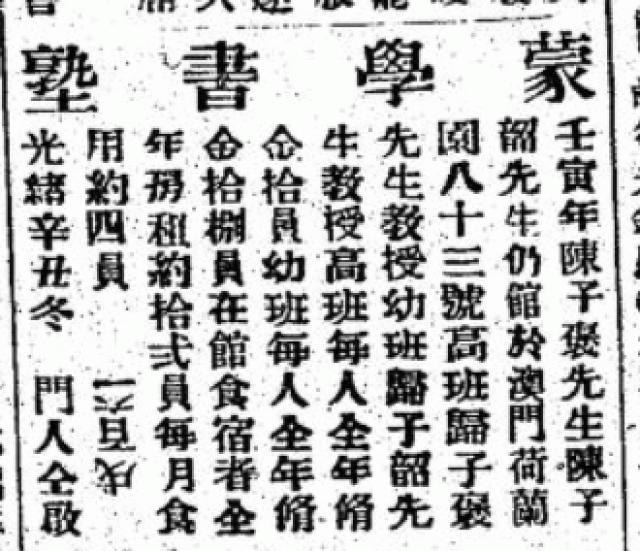
School of Classical Studies for Children
The Meng Xue Shu Ju (School of Classical Studies for Children) announced its operations for the Renyin year. Mr. Chen Zibao and Mr. Chen Zishao continued to teach at No. 83 Holland Garden, Macau. Mr. Chen Zibao was responsible for the junior class, while Mr. Chen Zishao taught the senior class. Annual tuition fees were 10 yuan for the senior class and 18 yuan for the junior class. For students requiring board and lodging, the annual rent was approximately 12 yuan, with monthly food expenses around 4 yuan. This announcement was made in the winter of the Guangxu Xinchou year.
hospital
private medical practice
Dr. Yin Wenkai announced his decision to establish a private medical practice. He recounted that since the Dingyou year, he had resigned from a teaching position at Beiyang Medical College and subsequently served for five years at the Alice Ho Miu Ling Nethersole Hospital in Hong Kong. During his time at the hospital, he often found himself unable to attend to friends and relatives due to his demanding duties, a situation he deeply regretted. To fully dedicate himself to his profession and serve the public, Dr. Yin will hand over his hospital responsibilities by January of the upcoming Western calendar year. He will then open his own clinic, where he will be available for consultations and treatments at any time, morning or evening. He humbly requested public understanding of this new endeavor. His clinic is located at No. 54, Peel Street, 4th floor, accessible from Gage Street. This announcement was made by Dr. Yin Wenkai on December 23, 1901.
Book
English book
English Made Easy
An advertisement for Mr. Luo Xingji's newly compiled English learning materials. His book, "English Made Easy" (or similar title), which was previously very popular and quickly sold out, has been revised and newly printed using Western methods. This updated edition is highly recommended for those learning English, with each set priced at one yuan. The book meticulously explains English pronunciation, ensuring consistency with English phonetics, and provides detailed guidance for each sound. It is designed to be a clear and accessible guide, serving as an excellent stepping stone for beginners. The book is available for purchase at Jin Fu Hao, Ju Jiao Wei, Wen Yu Tang, Wan Juan Lou, and Shuangmen Di Sheng Shu Lou.
Photo
Guang Li Xiang, located at…
Guang Li Xiang, located at No. 17 Main Road, Central, Hong Kong, advertised a range of photographic instruments, equipment, and chemicals. The store emphasized that its prices for equipment were exceptionally reasonable. This advertisement was published on the 17th day of the month.
Wah Zhi 19020403
An academy
An announcement from Hong Kong: An academy, initially referred to as a painting academy, has been established behind Man Mo Temple. It is now completed and scheduled to open soon. We hope for the enthusiastic support of all gentlemen, officials, gentry, and merchants. We are deeply grateful for all contributions and urge early donations. Our sincere intention is to contribute to the nation's progress. We pray that this esteemed academy will grow daily, fostering public morality, deepening public wisdom, and strengthening national capabilities. Students who study politics, law, diplomacy, and military preparedness will advance daily, thereby enhancing the nation's virtue, wisdom, and talent, leading to a stable and orderly society. The academy's system is unique, yet its educational methods, as described in ancient texts, are aligned with modern teachings. The imperial court is currently reforming politics and striving for national strength, and we are delighted by your patriotism and hope for the assistance of officials, gentry, and merchants to ensure its success.
The following is a list of esteemed patrons and general managers: Zhang Bishishi, Lu Guanting, Yang Peishan, Liang Renfu, Mai Zhao, Deng Liping, Zhao Heng'an, Yu Guopu, Rong Zhaolian, Tang Liang, Feng He, Chen Xuan, Huang, Chen Douyuan, Wu Shiyong, Wang Ziying, Jiang Shikai, Chen Yongyu, Xu Shun, Lao Shaoqiao, Lin Bingyuan, Li Zhuosheng, Wu Xinting, Li Tianrong, Zheng, Wen Junchen, Zhou Daxuan, Deng Jingquan, Wu Dingchen, Wu Ganqing, Tian, Fu Xingya, Li Feng, Ma Biao, Wu Dongchang, He Xingwei, Zhang Jian, Lin Shiquan, Lin Yaofan, Chen Qiu, Xie Gechen, Li Jianting, Huang Zhu, Huo Jianquan, Li Mengkuan, Zhao Laichen, Wu Ting, She Chen, Lei Gan, Xiang Huixingcun, Huang Zhongshi, Chen Zanting, Zhou Ruiyuan, Zheng Qianchu, Feng Chang, Huang Lichuan, Wu Jiewei, Chen Qiming.
From Kaiping County: Guo Yicao. From Xinzhu County: Wang Yizun. From Xiangshan County: Shen Yizun. Tang Weiqing Zhongcheng. Xiang, Liang Meixi, Liang Yungong, Su Gongxi, Zhang Zhinong, Zhang Bo, Zhang, Huang Yisan, Luo Zishou, Liang Nanpo, Wen Dajing, Gui Nanping, He, Feng Xiaoxiang, Xiang Yunxi, Feng Jinrong, Feng Jiyou, Zhu Guangcheng, Liang, Zhen Guoxiang, Huang Chaoliu, Li Mingfu, Rong Zimu, Feng Nian, Pu, Wen Ganting, Wu Rongxiang, Huang Guodong, Li Xisui, Chen Yantang, Feng, Lao Douyuan. From Guangdong Treasury: Puyuan Yin Ruan Licun. From San Francisco: Zhu Kongshe.
The following are names of those who initiated the construction: Xi Jiali, Qing Su, Ren, Luo Yusheng, He Maihua, Du Tingzhang, Chen Youyu, Cao Song, Wen, Weichuan.
The above list of esteemed names will be added as they arrive; please excuse any disorder in the sequence.
This announcement is dated the second month of the Guangxu 28th year (1902).
Tea House
The Red Apricot Grove
The Red Apricot Grove (紅杏林) announces its grand opening! We offer a unique haven for leisure and enjoyment, a picturesque setting for poetry and wine, where guests can fully immerse themselves in the beauty of the seasons. Our magnificent establishment, with its towering structures and ornate pavilions, offers breathtaking views of both the sea and the verdant mountains. We pride ourselves on a fusion of European and Asian cuisine, prepared by master chefs, and a selection of exquisite wines. Whether you wish to explore culinary delights, delve into tea culture, enjoy fine wine, listen to music, or be entertained by enchanting dances and songs under the moonlight, the Red Apricot Grove promises an unforgettable experience. We invite all esteemed guests to grace us with their presence. The Red Apricot Grove is located at the entrance of Tai Ping Shan West Street and is scheduled to open on the 24th of the second month. This announcement is made by the proprietor of the Red Apricot Grove on the 22nd day of the second month of the Ren Yin year (1902).
Rev. Dr. Charles R. Hager and the Mission School Fund on Man Mo
香港華字日報, 1915-03-03
A Lamp Must Be Lit When Riding a Bicycle**
=== 📝 OCR RESULTS ===
**A Lamp Must Be Lit When Riding a Bicycle**
Youth Lin Fu was charged with riding a bicycle on Chatham Road in Hung Hom on the 25th without having lit the lamp on the bicycle. The magistrate sentenced him to a fine of seven dollars or fourteen days in prison.
=======================
香港華字日報, 1915-11-03
*Secondary School English Reader*
**Approved by the Ministry of Education**
**Republic Textbooks**
**Secondary School English Reader**
---
### **Description**
This textbook series is compiled in accordance with the new educational system, comprising four volumes in total. All contents are selected from renowned English and American readers and historical records.
In each lesson, new vocabulary words are highlighted with phonetic symbols and Chinese translations to facilitate pronunciation, spelling, and definitions. Additionally, exercises on grammar, translation, conversation, fill-in-the-blanks, and error correction are included to teach sentence structure and composition, serving as practical exercises for immediate application. Chinese annotations focus on individual words, and a comprehensive glossary is appended at the end of the book for convenient reference.
---
### **Official Evaluation**
> "The difficulty level of this book is appropriate. The grammar, sentence-building, and conversation exercises at the end of each lesson are all derived directly from the lesson text, ensuring students benefit fully from every single lesson. The editorial design shows great care and effort; it is hereby approved for use as a middle school English textbook."
---
### **Pricing**
* **Volume 1:** Paperback 0.50 yuan | Clothbound 0.60 yuan
* **Volume 2:** Paperback 0.65 yuan | Clothbound 0.75 yuan
* **Volume 3:** Paperback 0.80 yuan | Clothbound 0.90 yuan
* **Volume 4:** Paperback 0.90 yuan | Clothbound 1.00 yuan
---
**Respectfully issued by the Hong Kong Branch of The Commercial Press**
香港華字日報, 1915-11-03
Hong Kong Watson's
# **Hong Kong Watson's (香港屈臣氏)**
### **1. Top-Quality Pure Peppermint Oil**
* **Price:** Large bottle: 50 cents | Small bottle: 20 cents
* **Details:**
There are many types of peppermint oil on the market, but everything depends on refined distillation. What others sell cannot compare to Watson's. Pure, mild, and rich in quality, it deserves praise for its miraculous efficacy.
It treats colds, dizziness, alternating chills and fever, frequent cold-induced coughing, vomiting accompanied by diarrhea, sudden severe abdominal pain, asthma with shortness of breath, and illness caused by pestilential mountain mists. It rapidly neutralizes toxins and miasma. Suitable for both oral intake and topical application, it brings relief to both mild and chronic ailments. If used according to directions, it proves effective every single time. Try it once to experience its superior power over other brands. An essential remedy for home and travel—purchase it to keep with you at all times.
---
### **2. Cold & Flu Snuff**
* **Price:** 10 cents per box
* **Details:**
When a cold strikes the head, a runny nose is inevitable, leaving one leaning miserably at their desk from the chill. Ancient remedies favored grinding herbs into snuff; today, we manufacture this medicine combining Western methods with traditional heritage.
Mild ailments can be treated directly through the nasal passages. It brings fast, miraculous relief for cold-induced headaches, nasal congestion, and related symptoms. Affordable, fast-acting, and an essential item to carry—no exaggerated claims!
---
### **3. Indigestion & Stagnation Liquid**
* **Price:** 50 cents per bottle
* **Details:**
Indigestion and food stagnation cause extreme discomfort, distressing breath and damaging stomach health. Left untreated, it can turn into a severe, deeply rooted condition. At the very first sign of symptoms, one must treat and prevent it immediately. Taking this liquid mixture restores health right away—it eases breathing, stimulates the appetite, and shows immediate, visible results.
---
### **4. Cough Lozenges (Pastilles)**
* **Price:** Large bottle: 25 cents | Medium bottle: 20 cents | Small bottle: 15 cents
* **Details:**
Coughing and wheezing are stubborn afflictions, suitable for men, women, young, and old alike. Whether it is chronic long-term coughing, day-and-night coughing, cold coughs, feverish asthma coughs, consumptive pulmonary coughs, cold-induced coughs, coughing up blood, hoarse wheezing, frequent short-breathed coughs, painful hacking coughs, chest-pain coughs, or phlegm-induced coughs—taking these lozenges never fails to stop coughing. It is the premier remedy for easing breathing and resolving phlegm.
---
### **5. Rheumatic Ailments Liquid Medicine**
* **Price:** Large bottle: $1.25 | Medium bottle: 50 cents | Small bottle: 25 cents
* **Details:**
Rheumatic conditions are extremely common, usually caused by carelessness in daily living and diet. Neglected early on, they turn into chronic, painful afflictions causing aching bones and joints, restricted mobility, or swelling in the limbs. Pain is doubled if aggravated by alcohol consumption. If not cured quickly, it causes lifelong misery.
Purchasing this medicine for treatment rapidly stops pain and restores health. Countless people have been cured—tens of thousands of bottles are sold annually. It also helps treat venereal conditions, skin sores, buboes, bone pain, and urinary blockages. Taken three times daily, its swift effectiveness is extraordinary.
---
### **Store & Distribution Notice**
* **Notice to Customers:** Please look for our official registered trademark when purchasing to ensure authenticity.
* **Branches & Agents:** Available at branch stores and authorized agents across all provinces and ports.
* **Hong Kong Sales:** Available at Watson's Hong Kong branches, major department stores, and Western pharmacies.
* **Main Depot:** Published by A.S. Watson & Co. Pharmacy, No. 1 Stanley Street, Hong Kong.
Dec., 16 ,1915
*Prosecuted for Partitioning Ground Floors with Wooden Boards**
**Prosecuted for Partitioning Ground Floors with Wooden Boards**
Yesterday morning, an assistant sanitary inspector prosecuted residents living on the ground floors of buildings around Second Street, Sai Ying Pun. Five or six households were charged with partitioning their ground-floor rooms with wooden boards, which violates Sanitary Board regulations.
The magistrate heard the case yesterday morning. The defendants are listed as follows:
(1) No. 6, Yuen Shing Lane, Sai Ying Pun;
(2) No. 95, Third Street;
(3) No. 10, Third Street;
(4) No. 99, Second Street;
(5) No. 5, Fuk Luk Lane;
(6) No. 7, Fuk Luk Lane;
(7) No. 64, Third Street.
A total of seven households.
According to the inspector's testimony to the magistrate, the ground floors occupied by the defendants were not previously used for commercial business, and partitioning rooms with wooden boards was strictly forbidden. After the partitions were put up, warning notices were repeatedly issued to stop them and order immediate removal. However, the defendants ignored the notices and treated them as mere paper promises.
The magistrate sentenced the resident of No. 10, Second Street to a fine of 2 dollars, and each of the remaining defendants to a fine of 3 dollars.
Document Analysis & Highlights
Dec., 23 , 1905
Auction Particulars and Conditions**
**Auction Particulars and Conditions**
Valuable property situated in Victoria City, Hong Kong, is to be sold by public auction by auctioneer Mr. Lemm at his auction room on Duddell Street, on Wednesday, 5th January 1916, at 3:00 p.m., under Lot No. 318.
**Details of the Property:**
**Lot No. 1**
The whole remaining section of a parcel of land, to be registered at the Land Office as Inland Lot No. 409, Section B, together with the building erected thereon, being No. 35 McGregor Street, Wan Chai. The area of the said land is approximately 808 square feet. The annual Crown rent payable is 12 dollars, 1 dime, and 2 cents ($12.12).
Document Analysis & Highlights
Crown Rent vs. Selling Price (The Valuation Ratio)
In British Hong Kong, all land was owned by the British Crown. Buying a property meant purchasing a long-term leasehold (typically 75, 99, or 999 years).
🗒 2. Crown Rent vs. Monthly Rent (The Investor's Margin)
A 35 McGregor Street tenement would typically be subdivided into multiple cubicles or floors and rented out to working-class families or small businesses [📄].
💡 Summary of the 1916 Property Financial Model
If we simulate the complete financial snapshot of No. 35 McGregor Street using these historical averages, the relationship becomes starkly clear [📄]:
The Bottom Line: Landlords in 1916 pocketed massive profit margins. Because the colonial government kept Crown Rent artificially low and fixed for decades, property owners could aggressively raise tenant rents to match the city's overcrowding crisis without their overhead taxes increasing by a single cent [📄].
Dec., 30, 1915
*Letter from the Overseas Club to the Governor of Hong Kong**
**Letter from the Overseas Club to the Governor of Hong Kong**
A letter from the manager of the Overseas Club to the Governor of Hong Kong stated that a communication had been received from the War Office, mentioning that the aircraft named *Victoria*, donated by the residents of Hong Kong, had already been dispatched to the front lines for operational service.
Brief details regarding its deployment are reported as follows:
The aircraft was used to assist artillery units and was also employed for enemy reconnaissance.
In July, while flying into enemy territory, the aircraft was attacked by two enemy planes, but the German aircraft were ultimately repulsed.
On October 22, the aircraft flew out again to gather military intelligence. While flying at an altitude of 7,000 feet, it was fired upon by an enemy plane coming from behind and below at a distance of approximately 100 yards. At that moment, *Victoria* immediately maneuvered to face the enemy and returned fire, ultimately accomplishing its mission successfully and returning safely.
Historical Timeline and Context
This excerpt is an official communication highlighting Hong Kong’s financial and material contributions to the British war effort during World War I (1914–1918). [1, 2]
An analysis of the historical context, the individuals involved, and the military technology mentioned reveals the following key insights:
1. Historical Timeline and Context
2. The Overseas Club and The Imperial Aircraft Flotilla
3. Military Role of the Victoria
The deployment details outlined in the letter perfectly mirror early WWI aerial doctrine before the advent of specialized fighter fleets:
香港華字日報, 1916 Jan., 07
香港華字日報, 1916-01-07
**Hong Kong Sincere Company New Store Grand Opening Announcement
**Hong Kong Sincere Company New Store Grand Opening Announcement**
Our company gathers goods from around the globe at fixed, non-negotiable prices, long praised by merchants and customers both at home and abroad.
Now, the construction of our new store building has been successfully completed. Soaring six storeys high, merchandise is displayed on every floor, featuring an expanded variety of novel and exciting goods. A rooftop garden has been built as a place for leisure and recreation. Equipped with mechanical elevators, it spares shoppers the toil of walking up stairs. Although not a grand modern spectacle, it is nonetheless a unique feature of this commercial center.
We have respectfully set the grand opening for January 12, Year 5 of the Republic of China (which corresponds to the 8th day of the 12th lunar month in the Yimao year). *(This day happens to coincide with the 16th anniversary of our company's founding.)*
We humbly hope for the patronage of all distinguished guests to honor us with your presence. Please do not hesitate to grace us with your visit; we extend our warmest welcome.
Hereby announced.
* **Date:** January 4, Year 5 of the Republic of China (1916)
* **Location:** New Store at Des Voeux Road Central, connecting to Connaught Road and Wing Wo Street
* **Telephone:** 617
* **Issued by:** Hong Kong Sincere Company
香港華字日報 1916-1-8
**Features of the New Goods Added at Sincere’s New Store**
**Features of the New Goods Added at Sincere’s New Store**
Our company sources merchandise from around the globe at fixed, unbeatable prices, which have long been welcomed far and wide. Owing to the grand expansion of our new store's shopping area, we have specially added exquisite merchandise to satisfy the needs of our distinguished customers. A brief list is as follows:
* **Rooftop Garden & Tea Room:** Fully equipped with fine Western pastries, milk, coffee, soft drinks, fresh fruits, and other delicacies, providing delightful refreshments for distinguished guests while sightseeing.
* **Gold, Silver, Jade & Electroplating:** Specially hiring master craftsmen to fashion gold and silver jewelry and various jade items, as well as undertaking fine electroplating work across all branches to create indispensable, fashionable ornaments.
* **Porcelain & Modern Goods:** A wide selection of colorful and novel porcelain from Jiangxi and abroad, worthy of being called modern lifestyle products.
* **Textiles & Fabrics:** Extensive sourcing of various high-quality fabrics directly from major textile factories, offering a complete variety of patterns at reasonable prices to promote factory sales...
*(Additional notes regarding grand opening in September without price increases...)*
**Jan 12, 5th Year of the Republic of China (1916)**
*Issued by Sincere Co., Ltd.*
Sincere Co. New Flagship Store (1916): Detailed Inventory and Fe
香港華字日報, 1915-10-27
Early Feminism and the Radical "Free Love" Drama of Fatshan (19